Skip to main content
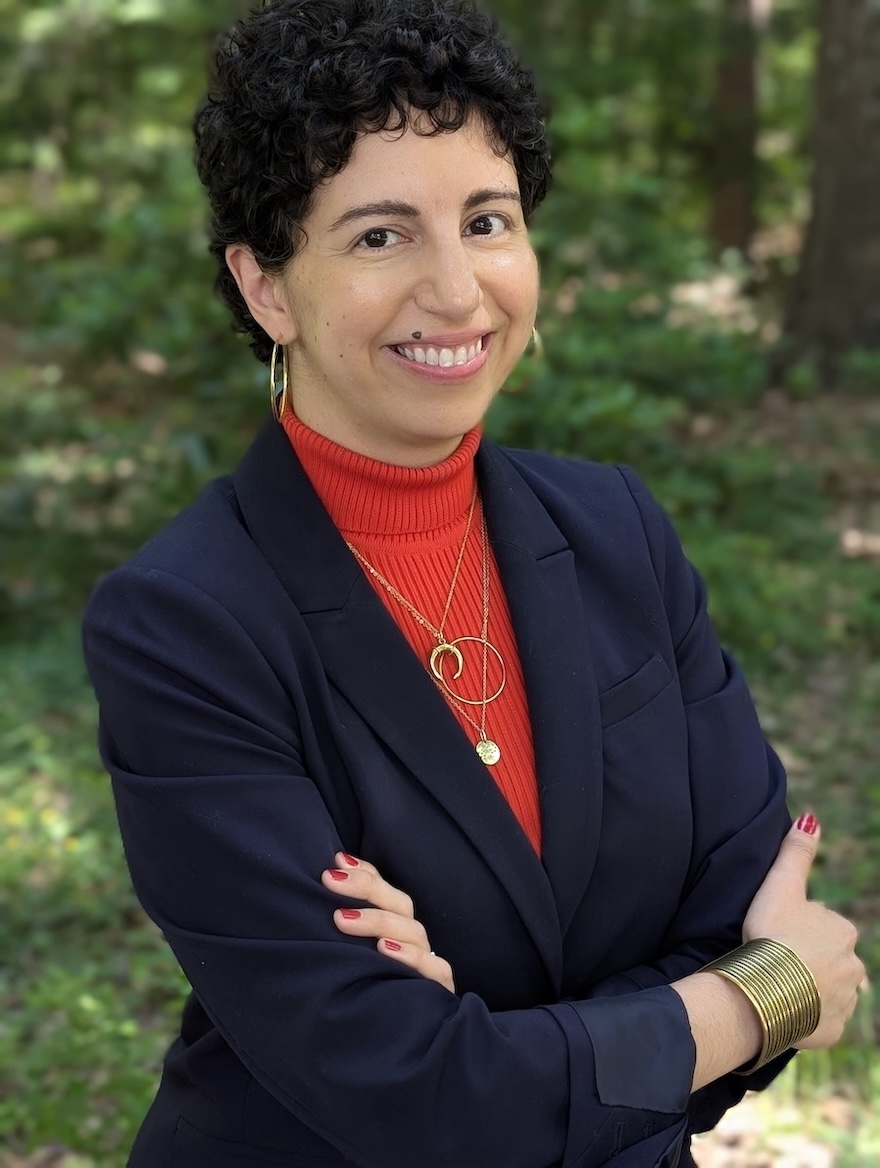

Interview with Isabel Gómez
Interview with Isabel Gómez
Editor-in-Chief of Mester XLV (2017)
Associate Professor at UMass, Boston
Mester: Dear Professor Gómez, thank you for taking the time to talk to us. How were Mester and the department back then?
Isabel Gómez: I had a very positive experience in the Spanish and Portuguese department during my graduate training 2009-2016. Faculty were so committed to the graduate program, and it felt like a place where students were all having a shared experience, because we are taking course requirements in every field from every professor and also studying together for the master’s exams. We all had the chance to take these classes together, some I look back on so fondly, seminars where we read everything by single authors: Cervantes, Sor Juana, Rubén Darío, and Clarice Lispector—what a luxury that was. At the same time, the master’s exams that we had, with reading a long list of works from Spain and Latin America, I remember feeling there was something a little bit old fashioned and canonical about it—but looking back I appreciate the way the program was centered and grounded in literary tradition. It was excellent training; it’s served me well. I didn't do my dissertation project in Caribbean literature, but because of the kind of coursework and reading required, I was able to design a class in Caribbean literature and culture for my department here at UMass Boston, which has been a great way to serve our students, many of whom have connections with Puerto Rico, the Dominican Republic, and Haiti.
I also remember how the department felt like there was always something happening—the public spaces in the department were constantly being used. It was a hardworking place, there was a lot to do, a lot to teach, and graduate students collaborated on everything.
One thing I remember about Mester is that it used to be very difficult, if not impossible, to complete an issue in the year in which you were the editor-in-chief—there was always a backlog. This made it difficult to try to do new things—for example, the covers of Mester were all the same. I really congratulate whoever it was who decided to put in the effort to start a new tradition—I notice that covers are now designed for different issues, and I think that's marvelous.
Also, I had completely forgotten about this, it’s not a nice memory, but I was actually in the Mester office when there was an active shooter on campus. That happened in 2016—it was a scary day for a lot of people, we all were told to shelter in place because there was an active shooter. Some grad students were teaching classes at the time, and needed to manage their students and all the fears that came up. I remember feeling grateful that I wasn't in charge of a classroom at that moment. We all got emergency text messages instructing us to close the door and not respond, so I was alone there in that office, looking at all the books and past issues.
Mester: Do you have any memorable challenges or stories to share with us?
Isabel Gómez: Honestly, the biggest challenge happened once I had graduated and moved to Boston, trying to complete the issue at a distance and getting reviewers and authors to finalize the articles. And, of course, getting myself to do the final work to finish the Mester issue while also starting my job as an assistant professor, that was the biggest challenge.
One thing that I was proud of in the issue I worked on was an interview featuring the Chicana Motherwork Collective, along with Carolina Beltrán, who was in my cohort and a member of the board. We had both been participating in a writing group with other women of color who were doing PhD projects in the humanities, some of us from the Spanish and Portuguese department, but also from Performance Studies, Chicano Studies, English. I had been really supported by this group in my writing and research process, and some of them were involved in activism for parenting academics and incorporating their experiences into intersectional scholarship, so it made me happy to be able to give them a platform. Since that time, they've published an edited volume, The Chicana Motherwork Anthology (University of Arizona Press, 2019), with essays about feminized labor and the transformative work of mother-scholars. One of the collective members Yvette Martínez-Vu has gone on to start her own mentoring business, Grad School Femtoring, and co-author a guide for students of color who are interested in entering grad school, Is Grad School for Me? Demystifying the Application Process for First-Gen BIPOC Students. These members of the Motherwork Collective were asking intentional questions of themselves and of our institutions, about how to thrive while also producing new knowledge from our unique perspectives. This is something that I was experiencing, but not yet theorizing the way they were; I really admired these classmates of mine, and I was happy to be able to interview them and write about their approach to combining scholarship with activism. It was my first experience in how curating other people’s work can be so rewarding, in a way that is different from producing your own writing.
Mester: Do you think that being editor in chief or part of the editorial board has helped your career in any way?
Isabel Gómez: Oh, definitely, yes! Training as a graduate student has so many pieces to it. There's the practice of your own scholarship, but around that core purpose we have the larger practice of being a scholar as a part of a broader community. Doing editorial work with Mester helped me learn so much about the larger picture, from the very practical side like learning how to use the journal’s online platform, to more nuanced skills, like how to give feedback and how to organize collaborative projects.
Being editor in chief gave me the confidence to say yes to opportunities that I might not have taken on otherwise. For example, I coordinated another special issue on “Translation Networks” for Transfer, a journal with the University of Barcelona. Then, I did an edited volume with a colleague of mine, Translating Home in the Global South (Routledge 2024), which began as a seminar for the 2020 ACLA conference. That conference was cancelled due to the COVID pandemic, but we set up a Zoom mini conference for our seminar because we wanted to keep our work going even though it felt like the world was falling apart. A lot of the papers were really good, so from having experience as an editor, I told my co-editor: I know we can do it; I know how we can pitch it to editors, this group of papers can make a good book. We talked to Routledge and Bloomsbury, which both have series on translation studies, and I felt like I knew how to communicate: what does this collection offer to publishers? How can we find the right match who would be interested in this work?
I think Mester gave me useful administrative and institutional experience, to be able to pursue projects and know that I had the time for them. Mester was my first leadership role as editor in chief, and maybe I let the process take too long, but it was good training. If I had made that same mistake in a different venue, that might have been a bigger problem. I think it helped me to have practice reviewing other people's manuscripts. I can feel confident saying yes because I've already practiced how to do it efficiently and usefully. That’s one piece of advice I’d give, to remember that when you're doing reviews, you are contributing to the author improving their work. When we spend too long reviewing articles, it’s usually because we are trying to edit it as though it's our own. For anybody who's doing editing work: be very strategic and limited in the amount of time you spend on somebody else's scholarship, because there are diminishing returns after a certain point. You're already helping them a lot by giving them your feedback.
Mester: And as the last question, do you have any advice for the editorial board of Mester?
Isabel Gómez: I guess this is advice from the field that I've worked within, translation and translation studies. I've now taken on the role as editor of the translation section of the Latin American Literary Review, and we're getting a lot of submissions. It makes me realize that journals like ours, including Mester, can provide a valuable space for publishing work in translation. Both journals have a good online presence and publish in English, Spanish, and Portuguese. This makes us a unique place for translations, especially of lesser-known texts with scholarly value, or work that needs paratextual framing or poses some challenge to the translator.
It's difficult to find publishers for translations, not all journals have that kind of specialized section, so I'd encourage Mester to consider creating a standing section for translations. It wouldn’t necessarily be for translations of new or unpublished work, as that kind of creative editing has another home in the other department journal Párrafo—my suggestion would be to solicit translations of genres specific to our field like the crónica, or archival finds related to ongoing research, or interesting literary criticism from earlier eras. Having a standing translation section can be beneficial for graduate students who are often working on objects of study that are not in English or are not circulating. We sometimes end up doing translations as a part of the research process, but then cite only small fragments of a piece that could be appropriately edited and framed with a short intro as something of wider scholarly interest. We did this for example in another issue when I was on the board, Volume 42 from 2013, with “Dispatch from Brazil,” a translation of a polemical speech by Brazilian writer Luiz Ruffato at the Frankfurt Bookfair, along with an excerpt from one of his novels.
Thank you for the invitation to reflect on my time with Mester – keep up the great work!