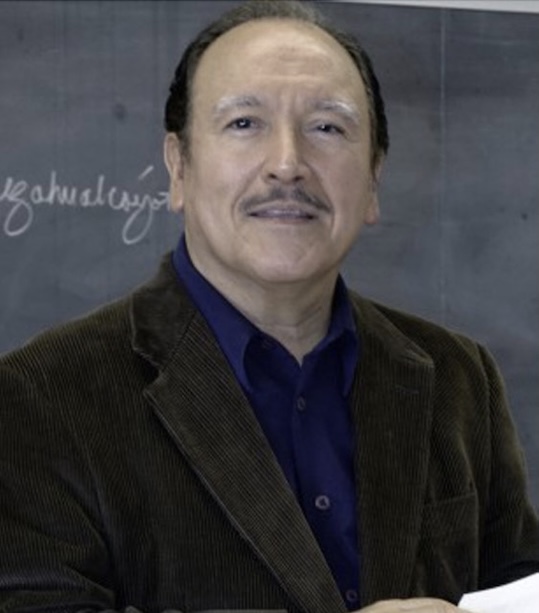
UCLA Alumnus, 1970-1973
Editor-in-Chief of Mester's volumes III, IV, and V (1973-1974)
Emeritus Professor of English and Emeritus Professor of Chicano Studies, CalState LA
In memory
of Aníbal Sánchez-Reulet,
and José Rubia Barcia
Mester: Dear Professor Cantú, we would like to thank you for participating in this interview. How was Mester and the department back then? Can you tell us a little bit about it?
Roberto Cantú: A little bit won’t do, Ícaro; I am carrying fifty years of memories, so allow me to expand on your probing questions that teleport me, so to speak, back to when I first drove into the UCLA campus, awestruck by the architecture, the campus gardens, and a group of chanting Hare Krishna devotees in saffron robes, offering flowers, and calling for Love and Peace from passersby. It was the Fall of 1970, a time when the war in Vietnam was a big distraction in the daily news, contemporaneous with Francisco Franco’s fascist dictatorship in Spain and, on a better note, a period in literary history when a generation of writers—from Carlos Fuentes and Alejo Carpentier, to Octavio Paz and Julio Cortázar, among others—had changed the destiny of many of us who had chosen to major in Spanish and Latin American literature. As I headed toward Rolfe Hall for the first meeting of a seminar on the Latin American Essay, taught by Professor Aníbal Sánchez-Reulet, I was determined to write my first seminar assignment on Alfonso Reyes, whose poetry and essays were to be the subject of my dissertation. It was in that fateful seminar that I met a group of graduate students--the founding editors of a literary journal they titled Mester--who were a few quarters away from taking their comprehensive examinations. The editorial team was composed of an international quartet: René Acuňa (Guatemala), Germán Charrón (Puerto Rico), Luis Comabella (Spain), and Luis Costa (Chile). On our first meeting, these promising professors and writers said they were eagerly anticipating the first issue of Mester, with their own poetry as its contents, to be released from the press in late 1970. René was a couple of decades my senior, a reader and translator in younger days of Arthur Rimbaud, and with a good mastery of Latin. He was also a former Jesuit priest who had fallen in love with a nun and—according to rumor--married her, was defrocked, and now found himself at UCLA, determined to succeed as a scholar. After completing his dissertation and graduating in 1973, René joined the faculty at UNAM’s Centro de Estudios Mayas, where he enjoyed a long productive life as an author of books on Mesoamerican topics, and as distinguished teacher until his death on January 20, 2018.
Fortune was on my side when I chose UCLA’s Department of Spanish and Portuguese for my graduate work. The faculty was diverse—from Latin America, Spain, Portugal, and the United States—with a stellar scholarly background. Others, just as strong in their scholarship, had extraordinary talents as teachers, among them Aníbal Sánchez-Reulet and José Rubia Barcia; the former, my dissertation adviser, whose political dissidence against Juan Domingo Perón’s government had resulted in his imprisonment; the latter, in younger days fought against Francisco Franco’s fascism during the Spanish Civil War, on the side of the Republicans. Two of his seminars were immensely important to my academic formation: first, on José Ortega y Gasset; the other, on Spanish novelist Gabriel Miró. Sánchez-Reulet and Rubia Barcia had exceptional powers of recall and textual penetration, able to bring to life books and events read or lived long ago. My classmates came from all points of the compass, some from Spain, others from Latin America (Argentina, Brazil, Chile, Cuba, Mexico, and Puerto Rico, among others), with a few from the nearby Republic of East LA. It was a time with no video games, no social media, no cell phones, no computers, and thus no email. My classmates were well-read, solitary book worms by night, and gregarious by day while on campus. We would meet daily at the “Gypsy Wagon,” a crimson-colored canteen with wheels resting on bricks, hence placidly immobile, with umbrellas, tables, and chairs for students and faculty to enjoy a sandwich, coffee, or a glass of juice before heading to class. It was at this gathering place where I organized Mester’s editorial board with founding editors René Acuňa, Luis Comabella, Luis Costa, Germán Charrón; fellow classmates Cristóbal González (Spain), Estela Herrera (Argentina); and two professors: José Rubia Barcia, and Alberto Machado da Rosa.
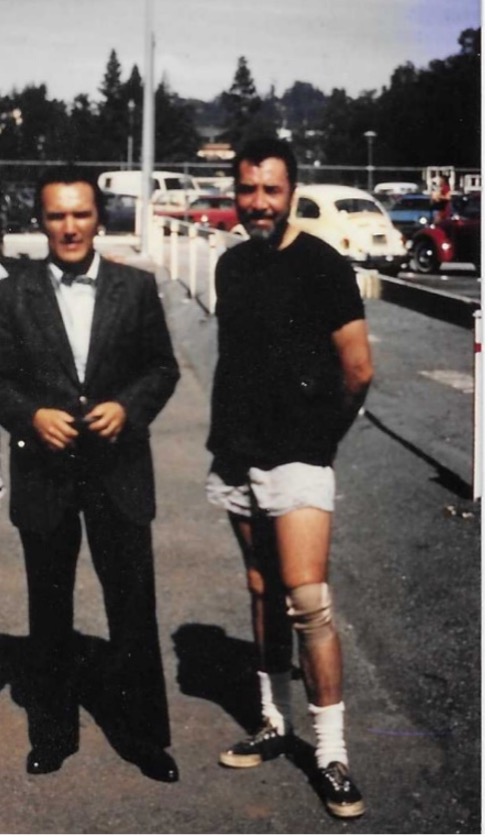
UCLA, Fall 1971. To my left, René Acuña, Editor of Mester (1971-1972)
Mester: Could you share a memorable moment, achievement, or funny story from your time as editor of Mester?
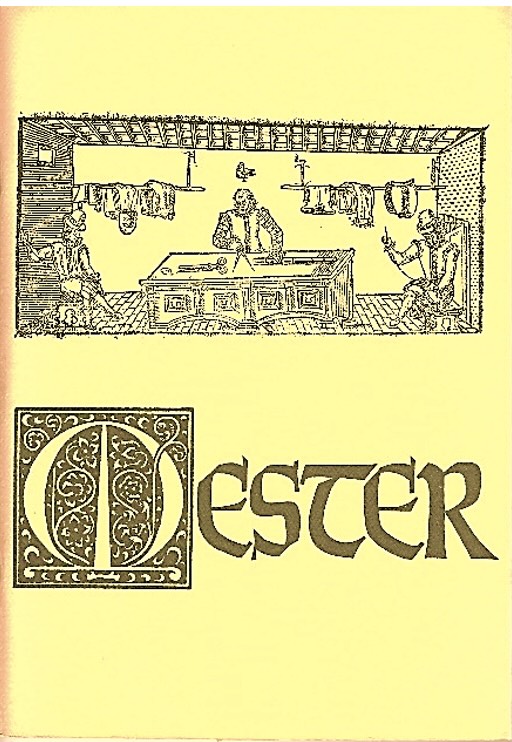
RC: In Fall 1971, René and I found ourselves in another seminar and jogging three times a week on the UCLA gym track. On one occasion he confided that he meant to convince Mester’s editorial board—his close friends and fellow poets—to transform and uplift Mester to the category of a literary journal that would include criticism, essays, poetry, and book reviews written by contributors from Latin America, Spain, and beyond. Before leaving the campus gym, René invited me to attend a meeting scheduled for that same evening to discuss the future of Mester with Charrón, Comabella, and Costa. “Don’t you want to join us,” René asked; “by the way, bring your seminar paper on Alfonso Reyes’ poetry.” That same evening, he disclosed that Sánchez-Reulet had handed him a copy of my essay, recommending that it be published in Mester. It was a brief but consequential meeting: I was made aware that Comabella, Charrón, and Costa were facing the deadline of their comprehensive examinations, with no time for the journal. I had been anticipating a contentious discussion on the future of Mester, followed by a revolt from the young editors; my perplexity, to my surprise, was followed by immediate laughter: it was René’s plan, they clarified, to bring me into the editorial board as Co-editor, and for me to take the reins as sole editor because, as René confirmed, he was scheduled to take his comprehensive exams in late 1972, to be followed by the dissertation. René added that several graduate students had been offered the editorship of Mester, but no one had accepted the responsibility. Thus, the plan was to snare me into a meeting where I would be declared Co-editor, the next phase to be under my responsibility. With his arm around my neck, René assured me that there was sufficient funding for future issues of Mester, therefore, not to worry about money. Released in April 1972, Mester emerged in a larger format, with a cover illustration of tailors at work in a Spanish medieval guild. The issue included poems by Pablo Neruda, a brief and masterful essay as an introduction to Neruda by René and, amid other contributions, my essay on Alfonso Reyes. My first essay publication.
UCLA, Mester, April 1972.
Months later, as I was planning the November 1972 issue, the office staff informed me that Mester owed $1,800 for past issues; as the new editor, I was responsible for securing enough funds to cover what was owed. I immediately called René whose inborn diplomacy and sense of humor resulted in shared laughs, mostly at my expense. He indicated that the Del Amo Foundation was a promising source of funding, and he was right. I telephoned the foundation, met with the board of directors, and received full funding; in time I also received financial support for Mester from the Chicano Studies Center at UCLA, and from UCLA’s Graduate Students Association. In the Winter 1973 I was facing two deadlines: first, my own comprehensive examinations had been scheduled to take place in the Spring 1973; second, the prospectus for my dissertation was due before the end of spring. I was also organizing the Fall 1973 issue of Mester, scheduled to be published in November of that year. As a first step, I met with Sánchez-Reulet to inform him that my dissertation would be on Mexican historian Edmundo O’Gorman, not on Alfonso Reyes, as I had planned; my aspirations had turned from poetry and the essay, to the eras of exploration, discovery, and colonization of the Americas as embodied in O’Gorman’s publications. It seemed to me that the world of literature had turned to theory, mainly French (Foucault, Lévi-Strauss, Barthes), and to modernism as posed earlier in works by Octavio Paz (El arco y la lira, 1957); Carlos Fuentes (La muerte de Artemio Cruz, 1962); Alejo Carpentier (El siglo de las lues, 1962); and Julio Cortázar (Rayuela, 1963), to name a few. As my dissertation adviser, Sánchez-Reulet counseled that I remain focused on my first choice, and to let go of Mester; after all, small journals were meant to have a brief existence. His advice was prudent; however, I thought of an alternative: to contact classmates, among them members of the editorial board, asking that, at least one or two of them, consider being editors of Mester. I was asked what salary came with such duties; when I replied that the editorial work would be voluntary, therefore with no monetary compensation, they politely declined, claiming that their studies swallowed all their available time. Of course, they were right, so I moved ahead trusting that all would work for the best, in the best of all possible worlds.
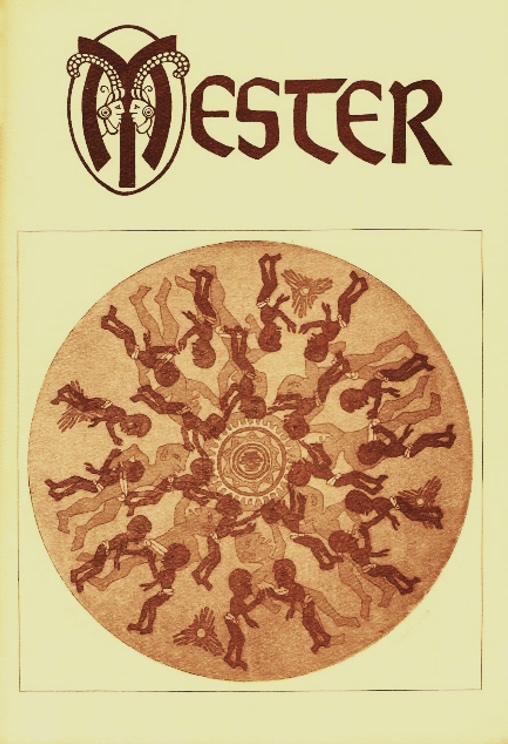
It did. I passed the comprehensive examinations, and submitted on time my dissertation theme, to be on Edmundo O’Gorman’s philosophy of history. Two weeks later I received a letter from the department chair inviting me to be a Teaching Fellow during the academic year 1973-1974, thus continuing as editor of Mester. In the Fall 1973 the new issue of Mester was in distribution. Department faculty, alumni, and members of the editorial board attended the presentation of this issue, including staff from the Chicano Studies Center, one of Mester’s benefactors. In this issue, I was turning away from Medieval Spanish themes in the journal’s cover art, opening Mester’s doors to what was at the time inconceivable: namely, the synchronous gathering of Portuguese (Alberto Machado da Rosa), Spanish (José Rubia Barcia), and Latin American poets and essayists (Ernesto Mejía Sánchez, José Antonio Gabriel y Galán), and two members of the editorial board: René Acuňa, and Estela Herrera. The spotlight, however, turned to the work of emerging Chicano writers, such as Miguel Méndez, Aristeo Brito, Juan Felipe Herrera, Alurista, Salvador Rodríguez del Pino, and Juan Rodríguez. When released, the Fall 1973 issue was arrayed with artwork by Chicana artist Gloria Flores (Art Department, UCLA). At the end of the book review section, I included my review of Rudolfo Anaya’s novel Bless Me, Ultima (1972), the recipient of the 1971 Quinto Sol Award (UC Berkeley). It marked my initiatory entry into Chicano literary criticism.
UCLA, Mester, Fall 1973.
Mester: Has being an editor of Mester contributed to your academic career?
RC: Shortly after the department’s presentation of Mester’s 1973 issue, the chair distributed among faculty and Teaching Assistants a memorandum with the news that Pablo Neruda had died on 23 September of that year. It seemed like a befitting occasion to dedicate an issue of Mester to Neruda’s work. As a Teaching Fellow, I was no longer pressed by seminar assignments, focused only on the courses I was teaching, and the research for my dissertation on Edmundo O’Gorman. I began contacting poets and literary critics who would be contributors to such homage. During my years of study for the bachelor’s and master’s degrees, I had read Neruda’s Veinte poemas de amor y una canción desesperada (1924), and Residencia en la tierra (1933), with fervor and admiration. Since then, Neruda had succumbed to a cult, dedicating poems to Stalin. In memory of his early work, I began plans for the next issue of Mester, released in April 1974 with contributions from Clayton Eshleman (on the poetry of César Vallejo); Eliana Rivero (an essay on Neruda’s Las manos del día); an essay by Jaime Alazraki on Neruda’s odes; and, among other contributors, Juan Villegas with an essay on Canto General, and René Acuňa on Vallejo’s Los heraldos negros. This issue drew the attention of a Neruda specialist who was department chair at Louisiana State University. In an exchange of letters, he raised the possibility of my joining the faculty in the Department of Spanish at his campus, suggesting the project of a co-authored book on Neruda’s poetry. In late May 1974, I received a formal contract to begin a tenure-track position at the Baton Rouge campus in Fall 1974. A few days later, and, with no other prospect of employment, I found a letter in my mailbox from the Department of Chicano Studies at Cal State LA, offering me a part-time position to teach courses on Mexican Literature in Translation and on the Chicano Novel. In the letter, the department chair referred to the November 1973 issue of Mester, and its inclusion of Chicano writers and work of Chicana artist Gloria Flores. The die had been cast. Never a practical person, I declined the tenure-track appointment. In the Fall 1974, I began my teaching duties: two courses, one on the modern Mexican novel, the other on the Chicano novel. I have never regretted my decision and know to this day that I owe that timely and promising academic option to Mester.
Around this time, I received notification that Alberto Machado da Rosa (1924-1974), an esteemed member of Mester’s editorial board, and Professor of Portuguese at UCLA, had died. When informed by the department’s office that Del Amo Foundation funds were available for one more issue of Mester. I immediately began the planning of a special issue in his memory. It was published in April 1975, with international contributors and a lengthy article by René Acuňa on the Popol Vuh. It would be one of the best issues I had edited, with the founding editors—René Acuňa, Germán Charrón, Luis Comabella, and Luis Costa--in Mester’s “Consejo de Redacción.” After the release of the 1975 issue, it came to my attention that unidentified students were claiming that I planned to take over Mester as my own journal, to profit from it. I had earned the trust of the department faculty, sponsors, and fellow editors, therefore disregarded what seemed to be hearsay. I turned Mester over to the Department of Spanish and Portuguese, with all invoices and debts paid in full. When leaving UCLA, I knew I was not venturing far away from familiar grounds; I was only a few miles away and would return to UCLA soon. In fact, I would not go back until fifty years later.
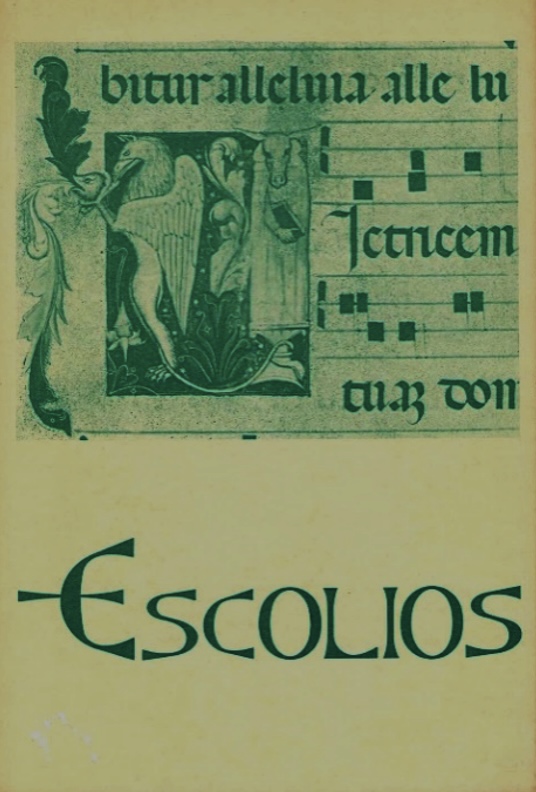
A week or two after I began my teaching duties at Cal State LA in the Fall of 1974, I received a letter from Donald O. Dewey, the Dean of the School of Arts and Letters, asking that I submit a personnel file with documentation of my academic work to date. Days later the dean’s office received my updated resumé and the issues of Mester I had edited. Dean Dewey (as I would call him later), had his secretary set up an appointment to discuss Mester, fully aware that its funding stemmed from the Del Amo Foundation, UCLA’s Graduate Students Association, and UCLA’s Chicano Studies Center. When we met, I indicated my intention to launch two journals, one titled Escolios: Revista de Literatura; the other, Campo Libre: Journal of Chicano Studies. Dean Dewey placed his trust in me, and agreed to fund Escolios, promising to allocate money for Campo Libre after evident results of my endeavors. The first issue of Escolios was published in May 1976, with poetry and essays by prominent Latin American writers, such as Guillermo Cabrera Infante, José Emilio Pacheco, Manuel Durán, Octavio Armand, Marco Antonio Montes de Oca and, among others, Saúl Yurkievich. The inaugural issue of Escolios made known its genealogical cord extending back to Mester in a medieval art illustration taken from a fourteenth century Franciscan breviary.
Cal State LA, Escolios, May 1976.
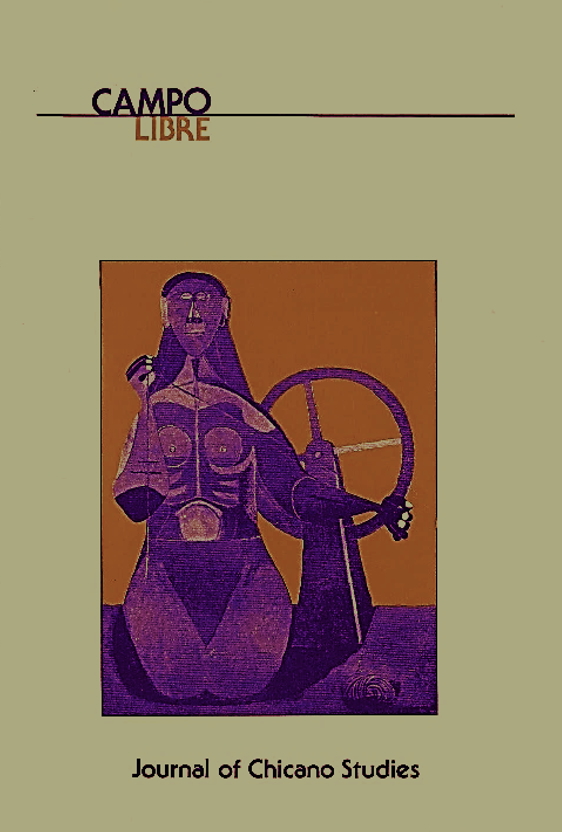
In the Fall of 1976, I began a full-time tenure-track position after my election as acting department chair, thus no longer living on a tight belt. What kept me afloat with enthusiasm during my bureaucratic duties was the bringing forth of four additional issues of Escolios published between November 1976 and May/November 1979. In that same year, I edited the bilingual edition (Spanish/English) of José Vasconcelos’ La raza cósmica/The Cosmic Race (1925/1979), translated by Didier Jaén, as the first volume of a series of translations I had proposed under the title Pensamiento Mexicano. Due to budget restrictions, it would be the first and last volume in said series. When I reminded Dean Dewey of his promise to fund Campo Libre, he honored the promise with funding for two issues: the first was published in the Winter 1981; the second, in the Summer 1981; the third, a double-issue dated Winter-Summer 1984, was funded by the Rockefeller Foundation. This volume corresponded to the proceedings of an international conference I had organized titled “Technology and Culture in the U.S.-Mexico Border,” funded by the Rockefeller Foundation, and held at La Jolla, California on October 9-12, 1983. For these proceedings, I selected essays presented by U.S. and Mexican scholars from major universities on both sides of the international border, such as David Halliburton (Stanford), Abelardo Villegas (UNAM), Leopoldo Zea (UNAM), Lawrence Hamilton (University of Texas at El Paso), Richard L. Drobnick (University of Southern California) and, among others, David Barkin (Centro de Ecodesarrollo, México). As the issue’s cover illustration, pride of place was given to Rufino Tamayo’s “Mujer Hilandera” (1943).
Cal State LA, Campo Libre, Summer 1984.
By the end of Spring 1984, to be followed by a summer vacation, I looked back to the Fall 1971 at UCLA when my apprenticeship as editor of Mester had begun. I felt thankful for the degree it had changed my life in the intervening twelve years. I survived three years (1976, 1978, 1980) as an acting department chair and, more important, I had completed my dissertation on Edmundo O’Gorman’s philosophy of history (1982), after many distractions and the editing of three journals. It was time to take a break. Instead of collecting and publishing the work of others, I began to publish my own work, mostly critical essays on Mexican and Chicano literature. The courses I had taken at UCLA provided me with a broad background, virtually interdisciplinary for tasks ahead in what I understood to be World Literature. Sensing that I was ready for other challenges, in the Spring 1994 I was invited to join the faculty in the English Department to teach Latin American Literature in Translation, and World Literature courses with an emphasis on the European novel from the seventeenth to the nineteenth centuries. I began my joint appointment in Chicano Studies/English in the Fall 1994. In 2011, thus after a hiatus of twenty-seven years, I returned to editing, this time with attention solely on books, one on Mesoamerica (2011); others on Mexican poets and novelists (Octavio Paz, Carlos Fuentes, Mariano Azuela, Alfonso Reyes [2014, 2015, 2016, 2019, respectively]); on Chicano novelists and Southwest balladry (Rudolfo Anaya, Américo Paredes, José Antonio Villarreal, And Alfredo Véa [2016, 2018, 2022, 2023]); on Mexican Mural Art, and Mexican American Cultural History [2019, 2021]). After forty-five years of teaching at Cal State LA, I retired in 2019, grateful to my UCLA professors who prepared me so well as if to make sure I would live most of my life as a prodigal son, away from a home in a Department of Spanish and Portuguese. I remembered reading in one of Octavio Paz’s books that life is never a straight line: it swirls upward on a spiral, never to return to its point of departure. Paz was rarely wrong, but this time it proved otherwise: in the Fall 2023, I received a letter from Professor Maarten van Delden, Chair of the Department of Spanish and Portuguese, with unexpected news: I had been selected to deliver the 2024 UCLA’s Department of Spanish and Portuguese Distinguished Alumni Lecture. The theme: Gods Go Begging, a Vietnam War novel by Chicano writer Alfredo Véa. With half a century of a wayward academic life, I had come home again.
Mester: What advice would you offer to the current editor?
RC: After two or three years, let it go; with the learned skills, pursue higher aims: pick up the quill and an ink bottle. By then, you will not need advice from anyone.