


1. Introduction
The ability to use grammatical rules to combine lexical items (i.e., words or signs) into phrases and sentences forms the core of the human capacity for language (Chomsky, 2017; Friederici et al., 2017; Lenneberg, 1969). Within a sentence, individual phrases are hierarchically grouped into constituents, essentially, groups of lexical items that behave as units (Everaert et al., 2015). For example, in the English sentence in (1), the lexical items [the new and interesting book] form a complex constituent, which can be focused (i.e., made more prominent by moving it to the front) in a so-called cleft construction, as in (2):
- (1)
- The girl reads the new and interesting book in the park.
- (2)
- It is [the new and interesting book] that the girl reads __ in the park.
This does not apply to the non-unit [new and interesting book in], which is why the construction in (3) is considered ungrammatical (conventionally indicated by an asterisk):
- (3)
- *It is [new and interesting book in] that the girl reads the __ the park.
The theoretical necessity of such groupings of lexical items into constituents for adequate descriptions of linguistic structures and their relations to each other was recognised early, and by now is firmly established (Everaert et al., 2015; Graffi, 2001; Harris, 1946; Nida, 1948; Pike, 1943; Wells, 1947).
Research over the past decades has established that the grammatical structure of sign languages also relies on the hierarchical grouping of lexical items into constituents (Cecchetto, 2017; Kocab et al., 2023; Mathur & Rathmann, 2014; Sandler & Lillo-Martin, 2001, 2008; Tang & Lau, 2012). For example, in the German Sign Language (DGS) sentence in (4), only the complete constituent [BOOK NEW INTERESTING] can be topicalized (accompanied by a non-manual marker in the form of raised eyebrows, glossed as ‘top’) by moving it to the front, as in (5).
- (4)
- PARK GIRL IX3a BOOK NEW INTERESTING READ
- ‘The girl reads the new and interesting book in the park.’
- (5)
- top
- [[BOOK NEW] INTERESTING] PARK GIRL IX3a __ READ
- ‘It is the new and interesting book that the girl reads __ in the park.’
This is not true for [BOOK NEW] as a sub-unit of the constituent which is embedded in the complex adjective phrase, so that extraction results in (6), which is considered ungrammatical.
- (6)
- top
- *[BOOK NEW] PARK GIRL IX3a [__ INTERESTING] READ
- ‘It is the new book that the girl reads and interesting in the park.’
The basic principles upon which language-specific syntactic structures are created are, therefore, remarkably similar across modalities (i.e., speech and sign), which is why some researchers treat them as abstract and largely universal (Chomsky, 1995; Pfau et al., 2018; Sandler & Lillo-Martin, 2001, 2008).
In parallel to the theoretical relevance of linguistic competence independent of the modality of language use (Chomsky, 1965; van der Burght et al., 2023), early psycholinguistic research began to investigate how abstract linguistic representations might affect ongoing cognitive processes in comprehension. A paradigm that was applied in those research lines was the detection of extraneous sensory signals such as an auditory click embedded in sentences (henceforth, the click paradigm; see Cutler & Norris, 1979, for a detailed overview). In this paradigm, initially introduced by Ladefoged and Broadbent (1960), participants listen to speech signals in which a short click occurs, and are asked to report when it occurred, usually by marking its position (e.g., with a ‘/’) in a written version of sentence they heard, or by typing both what they heard and the click position. We refer to these modality responses as offline responses, as the responses were made after the speech signal was over or generally without time pressure. The click paradigm, in its offline version, was used to investigate the extent to which the linguistic units assumed from a competence perspective could find a correlate in the performance domain. For example, Fodor and Bever (1965) employed this paradigm to investigate “the psychological reality of linguistic segments”, as evidenced in the title of their work, to test whether syntactic constituents might function as perceptual units in speech comprehension. Based on the notion that perceptual units maintain unity despite interfering stimuli, they interpreted the fact that participants mislocated clicks occurring within constituents, “migrating” them towards the closest major constituent boundary, as evidence for constituents being a psychological or perceptual reality in speech perception. Similar results were observed in follow-up work by Garrett and colleagues (1966) and by Bever, Lacker, and Kirk (1969), who further showed that this effect was specific to boundaries between clauses and absent for boundaries between phrases.
Building on the results of Fodor and Bever (1965), Holmes and Forster (1972) further observed that, in the offline click paradigm, not only were migration effects present, but also a modulation of the accuracy according to the click position in the syntactic structure. In particular, they showed that, even independently from migration effects (or with mild migration effects), accuracy was higher for clicks located between clauses, slightly decreasing for clicks between phrases, and becoming even smaller for clicks presented within phrases. This finding converged with the result of a previous work employing an online response modality, in which participants were asked to respond as fast as possible via button press as soon as they heard the click (Holmes & Forster, 1970). In this study, reaction times (RTs) for click detection were the fastest for clicks located between clauses, intermediate for clicks located between phrases, and the slowest for clicks within a phrase. This pattern of results was most strongly observed in the first half of a sentence, while differences between conditions became less pronounced or disappeared in the second half of the sentence. Building on the results of these two studies, Holmes and Forster (1970, 1972) suggest that the click paradigm reflects the processing load during sentence comprehension. Accordingly, both the accuracy (Holmes & Forster, 1972) and RTs (Holmes & Forster, 1970) data would indicate that the processing load is higher within constituents – hence, the lowest accuracy and highest RTs observed when the click occurs in this position – intermediate within phrases, and smaller between clauses. Furthermore, this account of the click paradigm would also be able to account for the fact that RTs were generally faster in the second half of the sentence (Holmes & Forster, 1970), as, in this case, the processing load might be generally lower than in the first part of the sentence, due to the presence of linguistic predictions. Subsequent work observing that the RTs of detecting clicks at a clause boundary were modulated by syntactic complexity (e.g., subject relatives vs. object relatives) further corroborated the notion that the click paradigm can reflect processing load during sentence comprehension (Cohen & Mehler, 1996).
In the present work, focusing on sign rather than spoken language, we test whether the click paradigm, in its online response format, might reveal processing load during the comprehension of German Sign Language (DSG). Accordingly, we assume the interpretation put forward by Holmes and Forster (1970, 1972) linking click detection to current processing load. We, however, point out that the click paradigm has also been adopted to investigate linguistic dimensions beyond hierarchical structure (for an overview, see Cutler & Norris, 1979), and, in some of these instances (i.e., open vs. closed class status), the pattern of results was consistent with modulation driven by acoustic low-level features, rather than high-level linguistic ones (Cutler et al., 1993). At the same time, we believe that the results of Holmes and Forster (1970, 1972) are largely consistent with several studies in the fields of psycholinguistics (e.g., Bever, 1988; Miller, 1964; see Levelt, 1995, for an overview) and neurolinguistics (Dehaene et al., 2022; Friederici et al., 2017; Hale et al., 2022; Maran, Friederici, et al., 2022; see Zaccarella & Trettenbrein, 2021, for an overview), demonstrating the pertinence of hierarchical constituent structure during auditory and written language processing, as well as automatic behavioral (Berkovitch & Dehaene, 2019; Pyatigorskaya et al., 2023) and neural (Batterink & Neville, 2013; Hahne & Friederici, 1999; Pulvermüller & Shtyrov, 2003; Pyatigorskaya et al., 2025) effects driven by syntactic structure.
In contrast to the extensively studied auditory and written domains, the link between abstract syntactic structure and cognitive processing in sign language processing remains poorly unerstood. Research over the past decades has demonstrated that sign languages as well as spoken and written languages are both primarily processed in the brain’s left-hemispheric language network (Campbell et al., 2007; Emmorey, 2015; Trettenbrein, Papitto, et al., 2021), with similar structural connectivity in the left, but not the right, hemisphere, compared to hearing individuals (Trettenbrein, Klein, et al., 2025). On the one hand, electroencephalographic studies with evoked potentials have shown that deaf signers’ brains show sensitivity to grammatical violations similar to the evoked potentials known from studies of spoken and written language processing in hearing non-signers (Capek et al., 2009; Hänel-Faulhaber et al., 2014; Hosemann et al., 2018). On the other hand, functional magnetic resonance imaging studies aiming to identify the neural basis of syntactic processing and hierarchical structure in sign language so far have yielded conflicting results (Matchin et al., 2021; Moreno et al., 2018; for in-depth discussion, see Trettenbrein, Zaccarella, et al., 2025). Psycholinguistic work on sign languages took an interest in syntactic processing in sign language already early on (e.g., Grosjean & Lane, 1977; Klima et al., 1979), but then has often focused on lexical and semantic processing as well as modality-specific phenomena, such as iconicity (Baus et al., 2013; Bosworth & Emmorey, 2010; Carreiras et al., 2008; Gutiérrez-Sigut & Baus, 2021; Thompson et al., 2009). To the best of our knowledge, no recent psycholinguistic studies have investigated how processing during sign language comprehension is modulated by hierarchy or constituent structure.
Building on the results obtained with spoken language (Holmes & Forster, 1970, 1972), the present study is the first to probe whether the processing load is modulated by hierarchical constituent structure during sign language comprehension. Accordingly, we adapted the classical psycholinguistic click paradigm from the auditory-oral modality of spoken languages to the visuo-spatial modality of sign languages. Using short white flashes inserted into videos of DGS sentences as analogues to clicks in the auditory domain, we sought to determine whether signers’ speed of detection of extraneous perceptual signals is modulated by their position within the hierarchical structure of signed sentences. We performed a pre-registered online experiment in which deaf signers watched videos of DGS sentences and had to respond to the white flashes, which could occur at different points in the constituent structure, as quickly as possible via button press. Building on Cutler et al.’s (1993) approach in the spoken modality, to rule out the possibility that any potential observed effects are perceptual, rather than linguistic, in nature, we performed a second independent pre-registered online experiment, using the same stimuli and experimental paradigm, with a group of participants not knowing DGS (i.e., hearing non-signers).
To preview our results, we observed no effect of our syntactic manipulations in either experiment. Additional analyses revealed effects of topicalization and uncertainty for both groups. In Section 4, we provide two potential explanations of the observed findings. On the one hand, continuing to maintain the assumptions of Holmes and Forster (1970, 1972) regarding the click paradigm, we argue that the simultaneous and time-shifted presence of syntax-relevant cues (i.e., hands, mouthings, and non-manuals) in the sign stream might have made it difficult to observe a modulation of processing load by hierarchical structure, compared to the spoken modality tested in previous studies. On the other hand, building on van der Burght et al. (2023), we highlight the point that, while our study was built on the assumption that the click paradigm can reflect the perceptual unity of syntactic constituents and ongoing processing load in comprehension (Fodor & Bever, 1965; Garrett et al., 1966; Holmes & Forster, 1970, 1972), not all studies employing this paradigm support this assumption (Abrams & Bever, 1969; Cohen & Mehler, 1996; Cutler et al., 1993; Reber, 1973). Finally, we further argue that non-signers attend to some non-manual cues (i.e., eyebrow raising), despite their lack of sign language knowledge, because they resemble communicative gestures (Herrmann & Pendzich, 2014; Pendzich, 2020).
2. Materials and methods
The experimental design, hypotheses, planned analyses, as well as stimulus materials were pre-registered independently at the Open Science Framework for both experiments. The full text of the pre-registration, including stimulus materials for the main experiment with deaf signers, can be found here: https://doi.org/10.17605/OSF.IO/N29AZ. The full text of the pre-registration for the control experiment with hearing non-signers can be found here: https://doi.org/10.17605/OSF.IO/9FR25.
2.1 Participants
Before the start of the experiment, participants in both experiments gave informed consent via button press. All participants received monetary compensation for participating in the study, regardless of whether they successfully completed the respective experiment. Participants were recruited from institutional databases and by distributing advertisements at deaf clubs and organizations as well as on the internet. All procedures were approved by the local ethics committee at the University of Leipzig (as part of application 301/21-ek).
2.1.1 Main experiment
A total of 80 deaf signers participated in the study. The data from only 53 of these participants (30 female, 21 male, 2 other; M age = 34.11 years, SD = 12.25 years) met our inclusion criteria and entered into the analysis. Participants were excluded from the analysis if they met one of the following criteria: (i) Overall accuracy below 75% in the comprehension questions. (ii) Less than 4 trials per cell of the experimental design (Structure × Position) after the response exclusion criteria listed below were applied. (iii) Wrongly reporting the presence of a flash in the filler trials more than 2 times out of 6 trials in total. (iv) Task not completed (i.e., participant withdrawal). Responses with the following properties were excluded from the analysis: (i) Trials with an incorrect response in the relative comprehension question. (ii) Trials in which the response was given sooner than 180 ms (Fry, 1975) after the flash occurred. (iii) Trials in which the response after the flash occurred was given later than the maximum duration of the signs immediately following a flash (1520 ms), as automatically determined from the annotations of stimulus clips. The vast majority of participants included in this sample reported that DGS was either their dominant or preferred mode of communication. On average, the self-reported age of sign-language acquisition was 1.52 years (SD = 3.37), with most participants reporting that they acquired DGS from their parents, family, and/or in a kindergarten or school setting. On a 7-point scale, participants on average rated their DGS skills as 6.64 (SD = 0.74). More than two thirds of our participants reported knowledge of an additional sign language other than DGS (e.g., American Sign Language [ASL], British Sign Language [BSL], and Polish Sign Language [PJM]) and/or International Sign (IS). Most participants were right-handed (N = 44), whereas five reported being left-handed and four self-reported no clear dominance.
2.1.2 Control experiment
As mentioned above, a control experiment with hearing non-signers was conducted to ensure that any potential effect observed in signers is linguistic in nature, and does not stem from low-level perceptual properties of the stimulus materials. This approach mirrors the one of Cutler and colleagues (1993), who could rule out a linguistic explanation of their findings employing the click paradigm, as the same effects were observed both in participants who could and participants who could not understand the language of the stimulus material. A total of 71 hearing non-signers participated in the control experiment, 18 of whom did not meet our inclusion criteria and were excluded until the desired sample size of 53 (33 female, 22 male; M age = 30.55 years, SD = 9.15 years) was reached, matched to the number of participants included in the sample of the main experiment. Exclusion criteria were identical to those applied in the experiment with deaf signers, with the following differences: (i) Participants reporting that they knew DGS or any other sign language were excluded from the analysis. (ii) The criterion requiring a correct response to the comprehension question was dropped. Except for one participant, all participants in this sample reported that German was their dominant and preferred mode of communication. Participants exhibited varying second-language profiles, with at least some knowledge of English. All participants reported no knowledge of DGS and confirmed that they did not know more than ten signs in any sign language. Most participants were right-handed (N = 47), whereas six participants self-reported as left-handed.
2.2 Stimuli
The paradigm for both experiments used short flashes inserted into videos of signed sentences as analogues to auditory clicks, which, following Holmes and Forster (1970), could occur in the first or second half of a syntactically complex DGS sentence consisting of a main and a subordinate clause (Figure 1). In this regard, the choice of short visual flashes as an equivalent of auditory clicks converges with the methodology employed by Geers (1978) to test lipreading in both signers and hearing participants. The exact point in time when the flash occurred (indicated by using a ‘/’) differed with regard to the syntactic structure of the sentence, so that a flash could occur after a major break in the constituent structure separating two clauses, after a minor break, or not at a break, as shown in (7)–(9) for the first half of the sentence and in (10)–(12) for the second half.
- (7)
- [NEXT MONTH WE HOLIDAY DRIVE CAN] / [OR WE FRIEND FAMILY TOGETHER HOUSE OLD RENOVATE]
- ‘Next month we can go on vacation or we renovate the old house together with friends and family.’
- (8)
- [[IMAGINE] / [[CAR NEW] BIG]]] [IX1 TWO BICYCLE ONE SCOOTER LOAD]
- ‘If the new car is big as I imagine, I can load it with two bikes and a scooter.’
- (9)
- [THREE FRIEND+++ LIKE [[APARTMENT / BIG] MOVE]] [BUT WITHOUT PARENTS
- neg
- 3bSUPPORT3a IX3a RENT PAY CANNOT]
- ‘The three friends would like to move into a big apartment, but without their parents supporting them they cannot pay the rent.’
- (10)
- [TODAY TRAVEL+GUIDE AND TRAVEL+GROUP WAIT STAND UNTIL
- hn hs
- CLOUDS DARK DISAPPEAR] / [REASON IX3pl WET WISH NOT]
- ‘Today the travel guide and the travel group wait until the dark clouds have disappeared because they do not want to get wet.’
- (11)
- [SPORTS+HALL INSIDE CHILD+++ BALL PLAY RELAXED MIX] [[OR TOGETHER PRACTISE] / [FOR NEXT COMPETITION]]
- ‘In the sports hall, the children casually play with the ball or practise together for the next competition.’
- (12)
- [LAST WEEK MY BROTHER CAR TIRE FLAT] [BUT LORRY [FROM / ENGLAND] HELP3a]
- ‘Last week my brother had a flat tire, but a lorry from England helped him.’
Stimuli were designed in such a way that there was no systematic bias of the phonological parameter ‘place of articulation’ for the signs immediately following a flash across conditions.
This yielded a 2 × 3 within-subjects design with the factors Position (first vs. second half) and Structure (major vs. minor vs. no break), where each combination of factors comprised six different sentences. Such a design naturally balances out potential technical differences (e.g., operating system, web browser, etc.) amongst participants in online experiments (Bridges et al., 2020). In addition to the six experimental conditions, six additional filler items (14.29%) in which no flash occurred were also included. These trials were included to reduce the possibility that later flashes are detected faster simply because they are more expected, due to the fact that no flash has yet occurred (see Reber, 1973). The stimuli were designed with the aid of deaf informants and recorded in the professional filming facilities of the SignLab at the University of Göttingen by one of the authors, who is a deaf native signer of DGS. To make the stimulus materials look as natural as possible, the signer produced mouthings and non-manuals spontaneously in the same manner as they would produce them in normal signed discourse (Pendzich, 2020; Trettenbrein, Pendzich, et al., 2021).
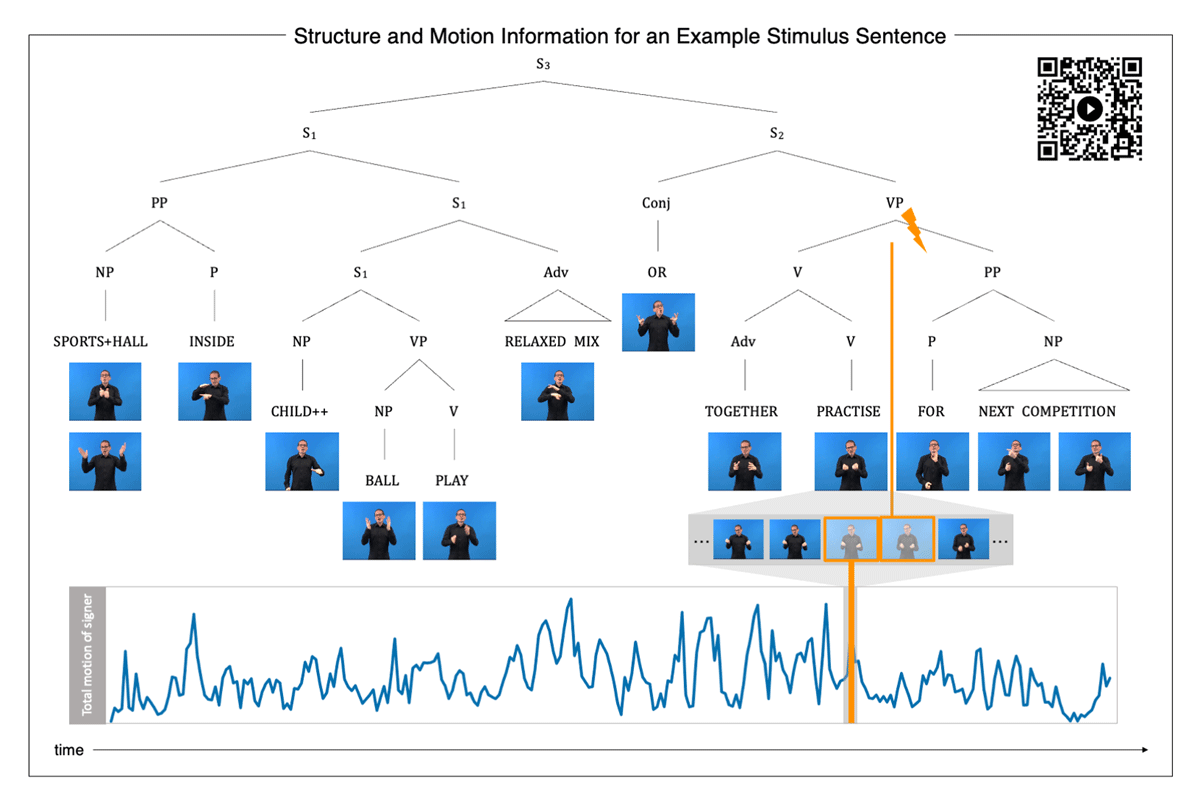
Figure 1: Structure and motion information for an example stimulus sentence.
Note. The top panel shows an example of the structural description of the constituent structure of a DGS sentence in our stimulus set with the extraneous visual signal located at a minor break in the second half of the sentence (i.e., part of the condition ‘minor-second’; video: https://doi.org/10.6084/m9.figshare.22573105). Representative frames for each individual sign are provided at the terminal nodes of the tree, together with English glosses. To illustrate: If this item had been part of the condition ‘major’, then the extraneous signal would have occurred between the signs MIX and OR. If it had been part of the condition ‘no break’, then the signal could, for example, have occurred between NEXT and COMPETITION. The abbreviations at the different nodes indicate different types of phrases (in order of occurrence in the diagram from left to right): Sentence (S), prepositional phrase (PP), noun phrase (NP), preposition (P), verb phrase (VP), verb (V), adverb (Adv), and conjunction (Conj). This DGS sentence roughly translates into English as ‘In the sports hall, the children casually play with the ball or practise together for the next competition’. The position in the diagram where the extraneous visual signal occurred is indicated by an orange flash. The smaller panel emerging from the position of the flash depicts individual frames in the video at this point in time and illustrates the two consecutive frames which were overlaid to achieve the visual manipulation. The bottom panel shows a plot of the total amount of motion of the signer occurring from frame to frame, as determined by the analysis of data from body-pose estimation performed on the stimulus video clip. The orange bar indicates the position in the video where the flash occurred.
All clips were annotated following a pre-defined coding scheme that was based on the so-called long view of the sign (Jantunen, 2015), before flashes were inserted using a fully automated video-editing procedure (see the file “add_clicks_to_stimuli.Rmd” in the online resources). In essence, this script takes an input video file, splits it into individual frames, then adds an overlay that constitutes the “visual click”, and ultimately recombines the individual files for every frame into a video file. More precisely, an initial set of annotations was created by one coder using ELAN (version 5.7-FX; Lausberg & Sloeties, 2009). A second coder then independently annotated 25% of the stimulus items randomly drawn from the set. This revealed a very high overlap between the annotations by the different coders (Hedges’ g for both the start and end of annotations: –0.02, 95% CI [–.02 –0.01]). Flashes were then inserted automatically, using a custom-made procedure which read the ELAN annotations into R (version 4.0.4; R Core Team, 2019) and added a half-transparent white overlay to two consecutive frames (i.e., for a duration of 80 ms [i.e., 2 frames at a rate of 25 frames per second] during playback, mimicking Holmes & Foster, 1970) at the end of the annotation of the sign occurring immediately before the desired location of the flash in the constituent structure of the sentence.1 This procedure was designed to mimic the nature and placement of clicks used in the auditory study by Holmes and Forster (1970) as closely as possible in the visual domain.
To control our stimuli for a possible correlation between the manual and bodily motion of the signed sentences (e.g., articulatory pauses) and the probed constituent structure, we used automated motion-tracking to quantify the movement of the signer in the videos (Figure 1, bottom panel). This analysis is intended to capture aspects of sign language prosody encoded by the body and hands, but cannot capture more fine-grained aspects of prosody encoded by the face (Fenlon & Brentari, 2021; Sandler, 2010). We fit a body-pose model capturing the posture of the signer using OpenPose (version 1.7.1; Cao et al., 2019) to all stimulus clips and computed an index for the velocity of this model on a frame-to-frame basis, using the OpenPoseR package (version 1.0.4; Trettenbrein & Zaccarella, 2021) in R. Based on the manual annotations of our stimuli, we then extracted the motion information for the duration of the annotations of all signs articulated immediately before a flash occurred. This indicated that the average motion of signs immediately before the occurrence of a flash (measured in arbitrary units) was very similar across conditions and did not differ systematically: major-first (M = 282.58, SD = 66.73), minor-first (M = 288.56, SD = 74.44), no break-first (M = 261.82, SD = 86.51), major-second (M = 305.18, SD = 101.27), minor-second (M = 332.36, SD = 181.07), and no break-second (M = 303.66, SD = 112.38).
2.3 Procedure
Both experiments were implemented in a fully-automated fashion in PsychoPy (version 2021.2.3; Peirce, 2008) and hosted on Pavlovia (Open Science Tools Ltd., https://pavlovia.org). Participants ran the respective experiment from home on their desktop computer or laptop in a web browser, following a pre-defined experimental flow (see the folder “data_task_instructions” in the online resources) that was designed to maximize the quality of the data collected (Kochari, 2019): After giving informed consent, participants filled out a basic demographic questionnaire. Next, they had to complete a short training session to practice the experimental task. In the main experiment with deaf signers, all instructions were given in DGS by means of pre-recorded videos. Participants were given the option to re-watch the instruction video and practice the task again, if necessary. In the control experiment with hearing non-signers, instructions were given in written German. In both experiments, the set of practice items was different from the set of items of the actual experiment. After completing the training session at least once, participants could progress to the actual experiment. When the experiment was completed (total duration: about 25–30 minutes), participants were automatically redirected to a secure server at the Max Planck Society to enter their payment information.
Every trial in both the main and control experiments had the same structure: Participants manually initiated a new trial by pressing the space bar with their dominant hand, to ensure that their hand was already placed on the keyboard and in the correct location for giving a response. After a jittered pre-stimulus interval of 1.5–2 seconds, participants were presented with an item from one of the six conditions or a filler item. Once a flash occurred in a video, participants had to respond by pressing the space bar as quickly as possible. The presentation of the stimulus (720 × 576 pixels, 25 frames per second) was followed by a jittered inter-stimulus interval of 1–1.5 seconds and the presentation of a binary comprehension question. In the case of the main experiment, the question was presented in the form of a DGS video. Due to the lack of DGS knowledge of participants in the control experiment, the comprehension questions were replaced with questions about the possible content of the signed sentences presented in written German. In both experiments, participants had to respond by pressing either the “1” key (yes) or the “0” key (no). The purpose of these questions was to ensure that participants were actively processing the stimuli. All items were presented in pseudo-randomized order, different for every participant, created using the in-house randomization-software Conan (version 1.9; Nowagk, 1998) and selected using custom Python scripts.
2.4 Pre-registered analyses
Data cleaning and analysis for both experiments were performed in accordance with the respective pre-registered analysis plans.
2.4.1 Main experiment
First, we excluded participants who did not complete the task, who wrongly reported the presence of a target (i.e., flash) in more than one third of the filler trials (2 out of 6), and whose overall accuracy in response to the comprehension question presented after the stimulus was < 75% correct. Second, we removed all trials with an incorrect response to the comprehension question, in order to make sure that only trials in which participants accurately processed the sentence entered into our analysis. Next, we removed trials in which (i) the response occurred before the flash, (ii) the response was given sooner than 180 ms (Fry, 1975) after the flash, or (iii) the response occurred later than the maximum duration of the signs immediately following the flash, as automatically determined from annotation data (i.e., 1,520 ms). Lastly, due to the generally rather low number of trials caused by the need of a succinct experimental task, we excluded data from all participants who did not reach a minimum of four trials per cell in the experimental design after the above exclusion criteria had been applied. This resulted in data from 53 out of a total of 80 deaf signers being included in the analyses.
Statistical analyses were performed by fitting a generalised linear mixed-effects model with a Gamma distribution to the raw reaction time data, using the lme4 package (version 1.1-33; Bates et al., 2015) in R. The fixed effects structure of our model included the factors Structure (major vs. minor vs. no break) and Position (first vs. second half), which respectively were treatment-coded with major as a reference level and sum-coded. Participants and items were included as random effects (Baayen et al., 2008). We started our analyses with a model that had a maximal random-effects structure, including random intercepts and slopes for all fixed effects and their interactions for participants and items:
RTs ~ 1 + Structure*Position + (1+Structure*Position|Subject) + (1|Item)
We expected to observe RT differences according to the location of the flashes within the different constituent breaks. Specifically, we expected a main effect of Structure, with longer RTs for the ‘no break’ condition compared to both minor and major, as well as a Structure × Position interaction, with longer RTs for the ‘no break’ condition compared to both minor and major only in the first half of the sentence, similarly to the results of Holmes and Forster (1970).
2.4.2 Control experiment
Participants were excluded from the analysis if they did not complete the experiment or reported that they knew DGS or indicated that they were familiar with more than ten signs in any sign language. Moreover, we excluded data from participants who wrongly reported the presence of a target (i.e., flash) in more than one third of the filler trials (2 out of 6) and who did not reach a minimum of four trials per cell in the experimental design after the above exclusion criteria had been applied. Data collection was halted when the sample of participants meeting these criteria matched the size of the sample of the main experiment (N = 53).
The statistical analysis of the control experiment was identical to the analysis performed for the main experiment described above. Notice that the purpose of this control experiment was to ensure that there were no perceptual or other lower-level factors present in our stimulus videos that were related to our factor of interest (i.e., Structure). Due to the lack of sign language knowledge of the group of hearing non-signers participating in this control experiment, we expected to observe no RT differences according to the location of the flashes within the different constituent breaks. Specifically, we expected to observe no effect of Structure, with RTs not differing systematically across conditions, as well as no Structure × Position interaction.
2.5 Exploratory analyses
In addition to the pre-registered analyses described above, we performed two independent additional exploratory analyses for both experiments: First, we adapted our inferential analysis by including Topicalization as an additional third factor in our experimental design. Second, we performed a reanalysis of our data within a Bayesian framework, to quantify evidence for the null hypothesis.
2.5.1 Topicalization as additional factor
As described in 2.2 above, all items presented during the experiment were complex DGS sentences consisting of a main and a subordinate clause. In DGS, a part of a clause can be topicalized (i.e., made more prominent) by moving it to the front of the sentence (i.e., actually producing it before the main clause). In order to make the stimuli more varied and interesting for participants, we had recorded two out of the six items per condition with a topicalized structure. Representative examples for the conditions ‘no break-first’ and ‘major-second’ are shown in (13) and (14), respectively.
- (13)
- top
- [[[YOUR / BIRD] COLOURFUL] IX1 LIKE-TO-TAKE-CARE-OF __] [REASON MY CAT DIED IX1 ALONE LIVE]
- ‘Your colourful bird I like to take care of, because my cat died and I live alone.’
- (14)
- top
- [RAIN+UMBRELLA NEW IX3a GRANDMOTHER GRANDFATHER BUS __ 3bFORGET] / [BUT BACKPACK BLUE 3aTAKE3b]
- ‘The new umbrella grandmother and grandfather forgot on the bus, but they took the blue backpack with them.’
The gap from which the topicalized element was moved was always located in the first part of the sentence. As already mentioned above, the production of topicalized structures in DGS is accompanied by a non-manual marker (i.e., raised eyebrows), glossed as ‘top’. We reasoned that the presence or absence of topicalization in some items could potentially have impacted responses to our stimuli in a manner that we originally had not considered.
Consequently, we included Topicalization as an additional factor in our experimental design and re-fit the respective models for both experiments with the following maximal random-effects structure:
RTs ~ 1 + Structure*Position*Topicalization + (1+Structure*Position|Subject) + (1|Item)
Because we had no a priori hypotheses about Structure for this additional exploratory analysis, we re-coded the factor from treatment to sum coding, so that any observed main effect would constitute an actual main effect and not just a simple effect relative to the baseline when Structure was treatment-coded in the pre-registered analysis (Brehm & Alday, 2022). We expected that including Topicalization in our models would reveal whether the presence of the non-manual marker for topicalized structures indeed had an effect on participants’ responses, either by influencing the grammatical processing in the group of deaf signers in the main experiment or by affecting the way in which non-signers responded to the DGS videos in the control experiment.
2.5.2 Reanalysis in a Bayesian framework
Due to the null result observed with our pre-registered analyses for both experiments, we sought to quantify the evidence for the null hypothesis by re-analysing both datasets within a Bayesian framework. Specifically, we computed a so-called Bayesian repeated measures analysis of variance (ANOVA), using the BayesFactor package (version 0.9.12; Morey & Rouder, 2023) in R. That is, our model included Structure and Position as fixed effects and specified Subject as a random effect:
RTs ~ position*structure + subject
Because there were only two observations per cell in the experimental design for Topicalization, we did not include it as a factor here. To meet the assumptions of ANOVA, RTs were log-transformed prior to the analysis, as well as aggregated by condition and participant. Bayes factors were obtained via the bayesfactor() function, which performs model comparisons as pre-specified in the BayesFactor package. We expected these analyses to confirm the absence of any effect of our experimental manipulations in either experiment.
3. Results
3.1 Pre-registered analyses
This subsection only reports the results of the pre-registered analyses for both experiments.
3.1.1 Main experiment
The full model converged, yet, contrary to our hypothesis, neither the factor Structure nor the factor Position could explain the variance observed. Results for the group of deaf signers are plotted in Figure 2. See Table 1 for descriptive statistics. Details of the statistical analysis are provided as part of the Supplementary Materials, in Appendix Table 1.
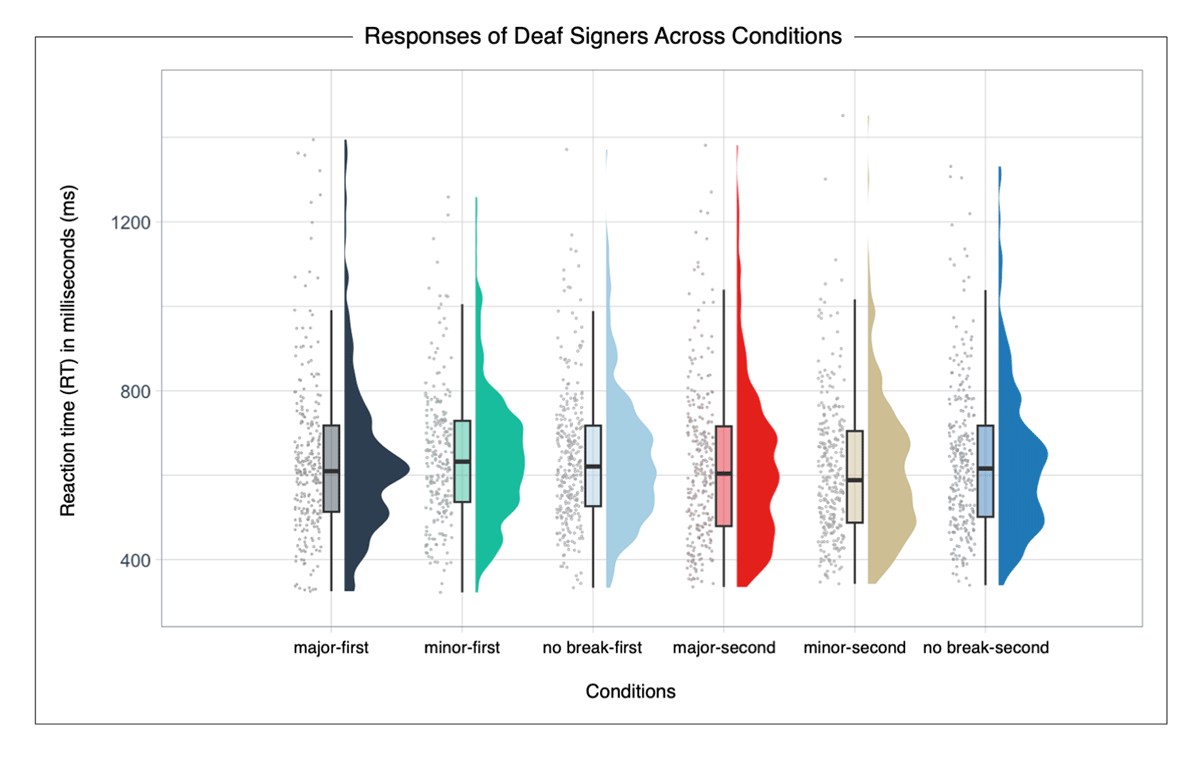
Figure 2: Main experiment: Responses of deaf signers across conditions.
Note. Illustration of the results from the main experiment with deaf signers. Individual responses, their distribution, and means are plotted for all six experimental conditions resulting from the combination of the different levels of the factors Structure (major, minor, no break) and Position (i.e., first vs. second half of the video). From left to right: major-first, minor-first, no break-first, major-second, minor-second, and no break-second. Reaction times (RT) are given in milliseconds (ms). No statistically significant differences between conditions were observed (all p-values > 0.05).
Main experiment: Descriptive statistics.
| First | Second | |||||
| Major | Minor | None | Major | Minor | None | |
| Mean | 644.00 | 647.33 | 640.77 | 621.08 | 617.34 | 636.17 |
| Standard Deviation | 161.56 | 125.11 | 125.05 | 141.24 | 137.84 | 142.47 |
-
Note. Descriptive statistics (means and standard deviations) for the main experiment with deaf signers per experimental condition.
3.1.2 Control experiment
The full model converged. In line with our hypotheses, we observed no effect of Structure and no Structure × Position interaction. Results for the group of hearing non-signers are plotted in Figure 3. See Table 2 for descriptive statistics. Details of the statistical analysis are provided as part of the Supplementary Materials, in Appendix Table 2.
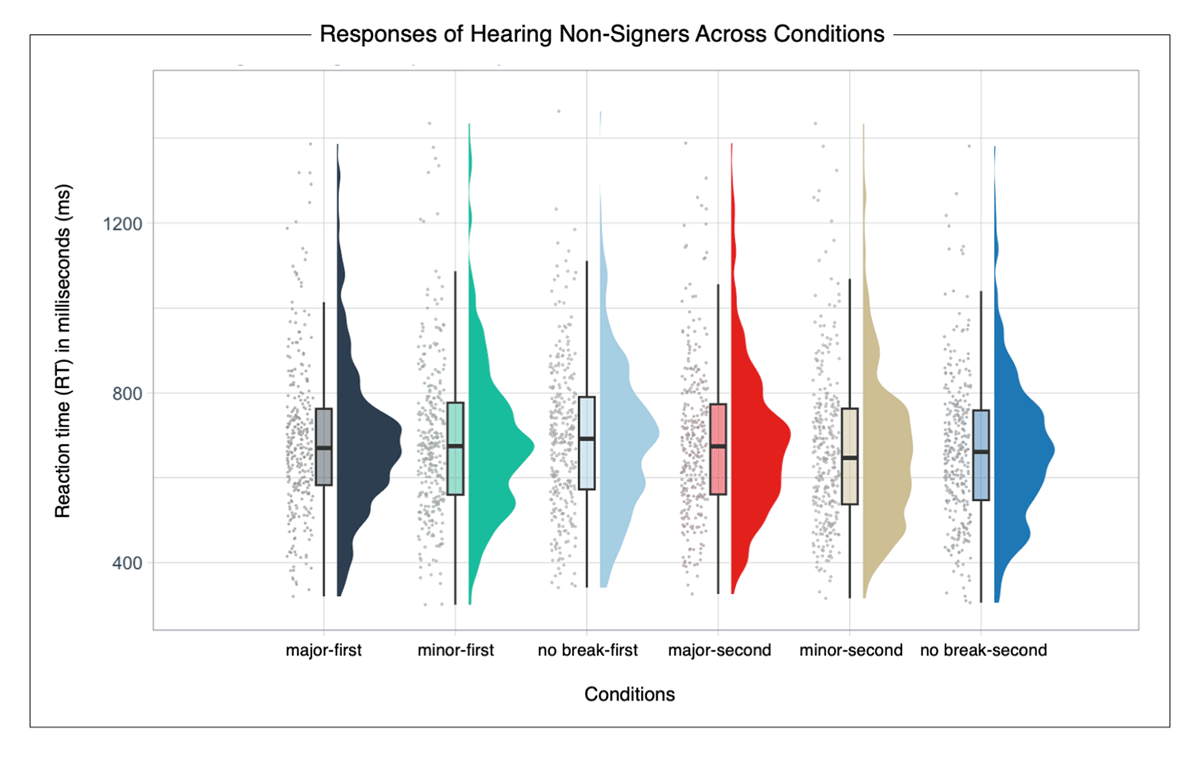
Figure 3: Control experiment: Responses of hearing non-signers across conditions.
Note. Illustration of the results from the control experiment with hearing non-signers. Individual responses, their distribution, and means are plotted for all six experimental conditions resulting from the combination of the different levels of the factors Structure (major, minor, no break) and Position (i.e., first vs. second half of the video). From left to right: major-first, minor-first, no break-first, major-second, minor-second, and no break-second. Reaction times (RT) are given in milliseconds (ms). No statistically significant differences between conditions were observed (all p-values > 0.05).
Control experiment: Descriptive statistics.
| First | Second | |||||
| Major | Minor | None | Major | Minor | None | |
| Mean | 692.15 | 693.05 | 696.19 | 687.26 | 673.55 | 664.21 |
| Standard Deviation | 143.02 | 139.72 | 125.49 | 134.34 | 140.68 | 130.76 |
-
Note. Descriptive statistics (means and standard deviations) for the control experiment with hearing non-signers per experimental condition.
3.2 Exploratory analyses
This subsection reports the results of the additional exploratory analyses which we performed for both experiments, in order to better understand the observed null result obtained in our pre-registered analyses for the main experiment with deaf signers and how it can be set in relation to the data of the control experiment with hearing non-signers.
3.2.1 Topicalization as an additional factor
Re-fitting the full model including Topicalization as an additional factor in the fixed effects structure to our data from the main experiment with deaf signers revealed a main effect of Topicalization (Table 3). This suggests that participants were generally slower to respond to items with topicalization, regardless of whether the flash occurred within the topicalized structure. Moreover, we observed a Structure × Position × Topicalization interaction, indicating that participants were slower to respond in trials with topicalization when the flash occurred in the first part of the sentence in the ‘minor’ condition.
Main experiment: Generalised linear mixed model including Topicalization as a fixed effect.
| Fixed Effects | Estimate | SE | t | p |
| (Intercept) | 6.431 | 0.038 | 171.113 | 0.000 *** |
| Structure1 | 0.006 | 0.015 | 0.414 | 0.679 |
| Structure2 | 0.000 | 0.017 | 0.020 | 0.984 |
| Position1 | –0.018 | 0.011 | –1.583 | 0.113 |
| Topicalization1 | 0.020 | 0.009 | 2.370 | 0.018 * |
| Structure1:Position1 | 0.003 | 0.014 | 0.206 | 0.837 |
| Structure2:Position1 | 0.001 | 0.014 | 0.047 | 0.962 |
| Structure1:Topicalization1 | –0.001 | 0.012 | –0.092 | 0.927 |
| Structure2:Topicalization1 | 0.008 | 0.012 | 0.687 | 0.492 |
| Position1:Topicalization1 | –0.010 | 0.009 | –1.105 | 0.269 |
| Structure1:Position1:Topicalization1 | –0.021 | 0.012 | –1.733 | 0.083 |
| Structure2:Position1:Topicalization1 | 0.032 | 0.012 | 2.628 | 0.009 ** |
-
Note. Significance codes: *** < 0.001, ** < 0.01, * < 0.05.
Similarly, re-fitting the full model including Topicalization as an additional factor to our data from the control experiment with hearing non-signers also revealed a main effect of Topicalization (Table 4). This indicates that hearing non-signers were generally also slower to respond to items with topicalization, regardless of where the flash occurred in the sentence. Moreover, we observed two Structure × Position × Topicalization interactions, indicating that hearing non-signers were still slower to respond to items with topicalization when the flash occurred in the first part of the sentence (i.e., within the topicalized structure) and regardless of the location of the flash in the constituent structure.
Control experiment: Generalised linear mixed model including Topicalization as a fixed effect.
| Fixed Effects | Estimate | SE | t | p |
| (Intercept) | 6.508 | 0.037 | 177.447 | 0.000 *** |
| Structure1 | –0.004 | 0.015 | –0.276 | 0.783 |
| Structure2 | –0.007 | 0.014 | –0.501 | 0.616 |
| Position1 | –0.013 | 0.012 | –1.139 | 0.255 |
| Topicalization1 | 0.019 | 0.008 | 2.322 | 0.020 * |
| Structure1:Position1 | –0.019 | 0.014 | –1.314 | 0.189 |
| Structure2:Position1 | 0.010 | 0.015 | 0.636 | 0.525 |
| Structure1:Topicalization1 | 0.003 | 0.011 | 0.252 | 0.801 |
| Structure2:Topicalization1 | –0.014 | 0.011 | –1.246 | 0.213 |
| Position1:Topicalization1 | 0.002 | 0.008 | 0.202 | 0.840 |
| Structure1:Position1:Topicalization1 | –0.025 | 0.011 | –2.173 | 0.030 * |
| Structure2:Position1:Topicalization1 | 0.032 | 0.011 | 2.802 | 0.005 ** |
-
Note. Significance codes: *** < 0.001, ** < 0.01, * < 0.05.
3.2.2 Reanalysis in a Bayesian framework
For the main experiment with deaf signers (see Table 5 for details), the Bayesian repeated-measures ANOVA indicated that our data provides strong evidence for an effect of Position (BF10 = 28.94), as well as strong evidence against an effect of Structure (BF10 = 0.078) and a Structure × Position interaction (BF10 = 0.06).
Results of the repeated-measures ANOVA for the main experiment with deaf signers.
| P(prior) | P(posterior) | Inclusion BF | |
| Participant | 1.000 | 1.000 | |
| Position | 0.600 | 0.980 | 28.940 |
| Structure | 0.600 | 0.100 | 0.078 |
| Position:Structure | 0.200 | 0.010 | 0.060 |
For the control experiment with hearing non-signers (Table 6), the Bayesian repeated measures ANOVA indicated that our data provides moderate evidence for an effect of Position (BF10 = 7.22), as well as strong evidence against an effect of Structure (BF10 = 0.052) and a Structure × Position interaction (BF10 = 0.057).
Results of the repeated-measures ANOVA for the control experiment with hearing non-signers.
| P(prior) | P(posterior) | Inclusion BF | |
| Participant | 1.000 | 1.000 | |
| Position | 0.600 | 0.920 | 7.220 |
| Structure | 0.600 | 0.070 | 0.052 |
| Position:Structure | 0.200 | 0.010 | 0.057 |
4. Discussion
In the present study, we set out to probe whether the processing load during comprehension, as measured by RTs in detecting an extraneous perceptual signal (Holmes & Forster, 1970, 1972), was affected by hierarchical constituent structure during sign language processing. We therefore adapted the classical psycholinguistic click paradigm (Fodor & Bever, 1965; Garrett et al., 1966; Holmes & Forster, 1970, 1972), in its online version (Holmes & Forster, 1970), from the auditory-oral modality of spoken languages to the visuo-spatial modality of sign languages. Accordingly, we employed short flashes inserted into videos of DGS sentences as visual analogues to auditory clicks (see Geers, 1978, for a similar methodological approach). Contrary to our hypothesis, we did not observe any effect of our syntactic manipulation in the main experiment with deaf signers. An additional exploratory reanalysis of the data in a Bayesian framework even revealed strong evidence against an effect of Structure in the experiment with deaf signers. In what follows, we will discuss two different explanations that can account for this null finding. First, we continue to maintain the assumption that the click paradigm captures processing load during sentence comprehension (e.g., Holmes & Forster, 1970, 1972) and we highlight how sign languages might provide a linguistic signal which makes comprehension resilient in face of external sensory stimuli. Second, we drop such an assumption and review some conflicting findings in the literature concerning the click paradigm. We then turn to the results of our exploratory analyses, which raise questions about the processing of non-manual components in sign languages by signers and non-signers alike, and about whether the click paradigm might represent a valuable tool for sign-language studies.
Assuming that RTs in the click paradigm, also in its implementation in the visual modality (Geers, 1978), reflect processing load (Holmes & Forster, 1970, 1972), our results suggest that the hierarchical structure of DSG sentences does not modulate this cognitive aspect during comprehension. This raises the question of why, compared to the spoken modality, an extraneous signal sharing the same perceptual modality as linguistic information does not affect processing in sign, as opposed to spoken, languages. Compared to the spoken modality, the complex simultaneous and time-shifted (i.e., different onset and offset points) presence of syntax-relevant cues (i.e., hands, mouthings, and non-manual markers) may make the cognitive processing of the visual signal of sign language more robust against disruption by extraneous signals than the mostly strictly linear speech stream (Figure 4). Thus, multiple articulators might jointly convey information that can be used to optimize ongoing cognitive processing, hence “freeing” resources that, in the current task, could be exploited to detect an extraneous visual signal. To boost the importance of the sequential syntactic information provided by perceived word, Holmes and Forster (1970) controlled their experiment for possible prosodic confounds. Our study attempted to do something similar by using automated motion-tracking on our stimulus clips (see 2.2 above).
Following the logic of Holmes and Forster (1970), the parser is assumed to build up syntactic structure by sequentially integrating incoming words or signs into the constituent structure during sentence comprehension, based on expectations about the continuation of the sentence. Whereas we still concur that this, in principle, is a reasonable assumption, closer inspection of what syntax-relevant information is present at what time in the sign stream, as opposed to the speech stream, makes it clear that the signed signal is much richer (Meier, 2002) and, consequently, provides several affordances that allow the comprehender to maintain optimal performance despite the additional demands imposed by extraneous signals. In other words, the potential disruptive effect on ongoing processing of the extraneous signal (i.e., the flash) at exactly these points in time appears to have been readily compensated for by the syntax-relevant information provided by the other articulators. Along these lines, it has also been argued that the nature of the major articulators of sign languages requires longer transition phases between signs, whereas these transitions are likely already informative with regard to the next sign (Hosemann et al., 2013; Wienholz et al., 2023; also see Grosvald & Corina, 2012). Hence, the different demands on temporal chunking imposed by the visual and auditory modality may lead signers to rely less on serial maintenance of linguistic units (Giezen, 2021).
Interestingly, previous work inspired by the click paradigm showed that visual flashes disrupt lip reading of spoken sentences in deaf signers (Geers, 1978). This work is of both methodological and theoretical relevance for the present findings. On the methodological level, it validates the presentation of flashes to non-hearing signers to disrupt ongoing processing. On the theoretical level, it shows that when extraneous visual signals disrupt communicative information that is serial (i.e., lip movements) and, therefore, not as redundant as signed sentences (i.e., simultaneous effectors), the cognitive load is increased in signers. Therefore, the findings of Geers (1978) are, in principle, compatible with the hypothesis we put forward above. At the same time, we acknowledge that lip reading of spoken sentences might, in itself, pose an increased cognitive load for signers (i.e., the use of a second language and only a proxy of the actual signal being available) as opposed to the processing of signed sentences (i.e., the use of their native language). Accordingly, we believe that our account of the combined results of Geers (1978) and our study might be worth exploring in future studies, comparing the effect of visual flashes on signed sentences and other visual serial communicative information.
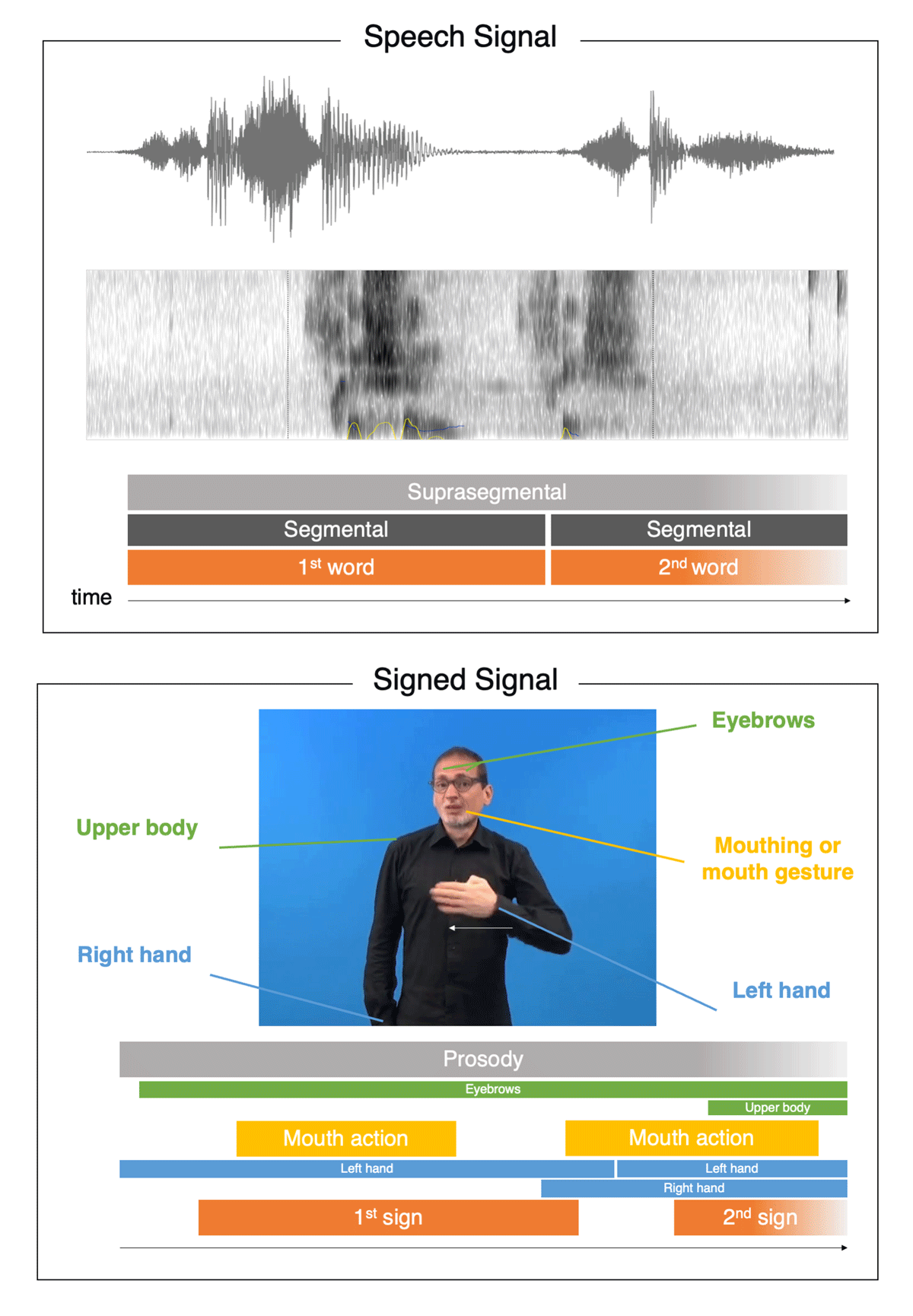
Figure 4: Syntax-relevant information present in the linguistic signal across modalities.
Note. A schematic depiction of the different properties of the auditory speech stream tested in classic click studies, opposed to the visual sign stream tested in the present work. The top panel shows the physical properties of the speech stream on top and depicts the different types of syntax-relevant information that can be imposed onto the representation of this signal at the bottom. Notice that the speech stream is, for the most part, strictly sequential, with suprasegmental information being the only exception. The bottom panel shows a still from a video of a DGS sentence to depict some of the relevant physical properties of the sign stream. Notice that the simultaneous and time-shifted (i.e., different onset and offset times) presence of syntax-relevant information is the norm. That is, a mouthing (or mouth gesture) that may accompany a sign (colour-coded in yellow) does not necessarily extend for the same duration as the manual component (hand form, hand position, contact area, starting point, movement, and end point; colour-coded in blue). Notice that the boundary between a sign’s start and end points and transitory movements is blurry (Hosemann et al., 2013; Jantunen, 2015; Wienholz et al., 2023). Similarly, syntax-relevant non-manual cues, such as raised eyebrows indicating topicalization or question components or position and movement of the head and upper body (colour-coded in green), can extend over several signs (Pendzich, 2020; Steinbach, 2023).
In addition to the many-to-one mapping required during sign language comprehension specifically for syntax-relevant cues, the canonical word order of DGS and other languages (sign and spoken) may impact the degree to which predictions of sequential elements constitute a cognitively useful strategy. That is, a central tenet of Holmes and Forster’s (1970) paradigm and, by extension, also of our adaption of this paradigm to the visuo-spatial modality, is that participants’ responses to an extraneous signal will be influenced by what further elements the parser anticipates based on previously encountered elements (i.e., the parser projects and maintains an open node which is reflected by increased processing load). While this is a reasonable assumption on the level of minor and major constituents, such predictive processing may simply not occur on the phrasal level (see Maran, Friederici, et al., 2022; Maran, Numssen, et al., 2022; for discussion), especially in languages where elements such as adjectives or adpositions usually follow the element that they modify (e.g., unlike in English or German, the adjective NEW follows the noun BOOK in DGS, as shown in the example sentence in (4); see Section 1). Accordingly, some trials of the within-phrase manipulation (i.e., the ‘no break’ conditions) in our main experiment may have been affected by this (i.e., the parser does not project an open node after BOOK, instead the structure [BOOK NEW] is only built up if and when a postpositional element is encountered). While the click paradigm has been employed in studies testing spoken languages in which adjectives or modifiers follow, rather than precede, the element they modify (e.g., Italian: van Ooijen et al., 1993; Spanish; Lobina et al., 2018; Mota & Igoa, 2017), they focused on linguistic dimensions other than the ones tested in the present paradigm.
The different points raised in the discussion above rest on the assumption that the click paradigm captures ongoing processing load; however, alternative explanations are possible once this assumption is dropped. That is, while a large number of studies have observed an effect on performance for the positioning of clicks with regard to the syntactic structure of sentences, other studies have questioned the general validity of the paradigm (see also Lobina et al., 2018 for related discussion). For example, Reber (1973) showed that even participants who are instructed to locate a “subliminal click” in a sentence have a tendency to locate it at a constituent boundary, despite the fact no click was actually presented. While this finding is compatible with the idea that constituents are perceptual units in language processing, they are problematic as they suggest that click paradigms might not capture the effect of an extraneous visual signal, but rather an implicit syntactic bias. Furthermore, Cutler and colleagues (1993) showed that the click paradigm might be strongly influenced by low-level properties of the stimulus materials, as similar results can be obtained also in participants without competence in the tested language. While these results (Cutler et al., 1993) were obtained focusing on a different linguistic feature (i.e., the open vs. closed class status of words) than the one tested here (i.e., hierarchical structure), they raise important questions about previous work that adapts this paradigm without ensuring that the effect is present only in participants who know the tested language.
Despite our null finding in the present study, we believe that the linguistic evidence for hierarchical constituent structure in the sign languages of the world is compelling (Cecchetto, 2017; Kocab et al., 2023; Mathur & Rathmann, 2014; Sandler & Lillo-Martin, 2001, 2008; Tang & Lau, 2012). Accordingly, we caution readers not to interpret our failure to observe syntax-specific effects in this study, which uses a comprehension paradigm, as evidence for the lack or irrelevance of hierarchical constituent structure in the comprehension or production of DGS in general. Instead, against the background of the general state of research on constituent structure and hierarchy in language and, specifically, sign language, we believe that either the greater robustness of the sign stream or limitations of the click paradigm provide a reasonable explanation for the observed null result. At the same time, we believe that our findings, and especially the methodological approach we developed for creating stimulus materials, which we make openly available in the dedicated repository, warrant further studies using different variations of the click paradigm (e.g., a version that does not rely on RTs during comprehension, but instead increases the memory demands imposed on participants by requiring them to first encode, and then decode, the perceived sentences; Holmes & Forster, 1972; Seitz & Weber, 1974).
To further explore the data collected, we performed two additional exploratory analyses, which suggested that the presence of non-manual markers for topicalization in some items has a significant effect on the general responses to the “flashes” in both groups of participants, demonstrating that hearing non-signers attend to some non-manual cues of DGS (i.e., raised eyebrows marking topicalized structures), despite their lack of knowledge of the language. Interestingly, the main effect of Topicalization was not just present in the main experiment as well as the control experiment, but also showed the same directionality (i.e., signers and non-signers both were generally slower to respond to topicalized items, regardless of whether the flash occurred in the first or second half of the sentence). Moreover, hearing non-signers’ responses were especially inhibited when the non-manual marker was present at the beginning of stimuli, presumably due to the overlap of this syntactic marker of DGS with a non-manual gesture (Dohen & Lœvenbruck, 2009; Wierzbicka, 2000). Building on Cutler et al. (1993), the fact that the effect is present in both groups rules out an explanation on the grounds of language knowledge. However, the exploratory nature of this analysis does not allow us to determine whether the observed effects are driven by different causes in the two experiments. Despite grammatical and lexical functions of non-manuals in the visuo-spatial modality, both deaf signers and hearing non-signers also use non-manuals to express emotions, reactions, and attitudes (Pendzich, 2020; Wilbur, 2021). Specifically, Pendzich (2020) showed that raised eyebrows presented in isolation, without a signed context, are interpreted as an interrogative marker by deaf signers as well as hearing non-signers, pointing towards a possible gestural origin of this grammatical marker (Domaneschi et al., 2017; Janzen, 1999; Van Loon et al., 2014). Furthermore, this facial cue also showed a strong relation to scepticism for hearing non-signers (Pendzich, 2020).
The finding that signers and non-signers show similar effects for topicalized items, despite the difference in their knowledge of DGS, in combination with the observation that in both experiments, participants were actually slower to respond when non-manual components in the form of raised eyebrows (i.e., topicalization markers) were present in the stimulus, raises questions regarding the cognitive status of non-manuals. In the literature, two different views have been put forward: Some have considered non-manuals as the direct surface realisation of syntax (Emmorey, 2002; Wilbur & Patschke, 1999), whereas others have argued that some aspects of the linguistic analysis of non-manuals may be achieved by other (not necessarily linguistic) cognitive systems (Atkinson et al., 2004), presumably in tandem with the language system. That is, signers are assumed to at least initially recruit additional cognitive resources (e.g., non-linguistic systems for processing facial gestures with a lexicalised meaning, such as ‘top’), but this information is then forwarded to the language system. Our data cannot resolve this question, but they seem to indicate that the use of non-manual components, indeed, imposes additional processing demands, regardless of participants’ knowledge of DGS: Both experiments showed that participants were slower to respond when items included topicalization markers, though only the group of deaf signers could have processed them as such grammaticalised components.
Lastly, the Bayesian reanalysis of the data from both experiments confirmed the null result for our syntactic manipulation, but, at the same time, also revealed evidence for an effect of position, thus indicating that the original effect of position observed by Holmes and Forster (1970) most likely is not linguistic in nature, but instead reflects a general effect of attention. In the original article that served as an inspiration for the present study, Holmes and Forster (1970) concluded that participants’ slower responses to clicks occurring in the first half of the sentence, as opposed to the second half, reflected the decreased processing demands during the second half of the sentence, because more linguistic information has already been encountered, while the kind of new linguistic information that needs to be integrated becomes more predictable. Our adaptation of the paradigm to the visuo-spatial modality of sign language, in combination with the data from the control experiment, allow us reconsider this claim: If the response pattern described by Holmes and Forster was, indeed, only caused by increased cognitive demands during processing complex sentences, we should not have observed an effect of position in our control experiment with hearing non-signers, who did not process the stimuli in a linguistic manner. In contrast, our Bayesian reanalysis showed an effect of Position in both experiments, though more pronounced for the main experiment with deaf signers. Hence, we argue that any observed effect of Position in this paradigm actually does not necessarily reflect decreased linguistic processing demands, but indexes decreasing uncertainty as a trial progresses during the experiment.
5. Conclusion
While linguistic research has demonstrated that sentences exhibit a complex internal structure independent of modality (i.e., speech or sign), our set of pre-registered experiments presented here, which adapted the classical psycholinguistic click paradigm to the visuo-spatial modality, failed to observe any influence of hierarchical constituent structure on cognitive processing load during sign language comprehension. Interestingly, additional exploratory analyses suggested that the behaviour of non-signers was systematically influenced by non-manual cues, despite their lack of knowledge of DGS. The Bayesian reanalysis of the data from both experiments then revealed a general effect of uncertainty, depending on whether the flash occurred in the first or second half of the video, independent of participants’ knowledge of DGS.
Against this background, we conclude that the simultaneous and time-shifted presence of different syntax-relevant cues (i.e., hands, mouthings, and non-manuals) makes the sign stream robust against disruption by extraneous visual signals. At the same time, our data indicate that non-signers without any knowledge of DGS nevertheless attend to the non-manual cue for topicalization (i.e., raised eyebrows), despite not comprehending its syntactic relevance, possibly because its form resembles a communicative gesture for interrogatives which has been grammaticalized in DGS (Pendzich, 2020). Future work should probe the constituent structure of sign languages using memory-based variations of the click paradigms similar to Holmes and Forster (1972).
Appendix Table 1
Main Experiment: Generalised Linear Mixed Model.
| Fixed Effects | Estimate | SE | t | p |
| (Intercept) | 6.420 | 0.047 | 136.741 | 0.000 *** |
| Structure2 | 0.000 | 0.036 | –0.007 | 0.994 |
| Structure3 | 0.009 | 0.032 | 0.271 | 0.787 |
| Position1 | –0.014 | 0.024 | –0.610 | 0.542 |
| Structure2:Position1 | –0.010 | 0.033 | –0.310 | 0.756 |
| Structure3:Position1 | 0.010 | 0.033 | 0.293 | 0.769 |
-
Note. Significance codes: *** < 0.001, ** < 0.01, * < 0.05
Appendix Table 2
Main Experiment: Generalised Linear Mixed Model.
| Fixed Effects | Estimate | SE | t | p |
| (Intercept) | 6.508 | 0.043 | 150.633 | 0.000 *** |
| Structure2 | –0.009 | 0.031 | –0.299 | 0.765 |
| Structure3 | –0.012 | 0.033 | –0.367 | 0.714 |
| Position1 | –0.002 | 0.023 | –0.079 | 0.937 |
| Structure2:Position1 | –0.013 | 0.031 | –0.425 | 0.671 |
| Structure3:Position1 | –0.023 | 0.030 | –0.758 | 0.448 |
-
Note. Significance codes: *** < 0.001, ** < 0.01, * < 0.05
Notes
- Due to the varying length of transition movements between signs, this procedure was chosen to maintain consistency with regard to flash placement across stimulus items: That is, the flash was always added at the end of the annotation preceding the desired location, because at this point, the sign had already reached full articulation, ensuring that its lexical properties were already available. At the same time, due to this placement, the transition movement and subsequent sign were not physically affected by the flash. Given this timing and placement, it is unlikely that the flash interfered with lexical processing of the sign immediately preceding or following the desired location. Moreover, note that the task required rapid detection of the flash itself (analogous to auditory click detection paradigms), rather than processing of surrounding lexical items; meaning that any potential influence of the flash location and its physical properties on lexical processing could only be determined using different experimental designs. [^]
Data accessibility statement
All stimulus clips, task instructions for participants, data, and analysis scripts are publicly available from the Open Science Framework: https://doi.org/10.17605/OSF.IO/9BR3P.
Ethics and consent
All procedures were approved by the local ethics committee at the University of Leipzig (Ethik-Kommission an der Medizinischen Fakultät der Universität Leipzig) as part of application 301/21-ek. Prior to both experiments, participants received instructions in their respective preferred language (DGS or German) and gave informed consent via button press.
Acknowledgements
We would like to thank all deaf and hearing participants, Jens-Michael Cramer for consultation during stimulus construction and for signing the instruction videos used for this study, as well as Joëlle A. M. Schroën for statistical advice and comments on a first draft of this manuscript. This work was funded by the Max Planck Society and the University of Göttingen. During preparation of this manuscript Patrick C. Trettenbrein was funded by the Deutsche Forschungsgemeinschaft (DFG, German Research Foundation) – 501984557 which is part of the DFG SPP 2392 “Visual Communication” (ViCom).
Competing interests
The authors have no competing interests to declare.
Authors’ contributions
Patrick C. Trettenbrein: Conceptualization, Data curation, Formal analysis, Investigation, Methodology, Project administration, Software, Validation, Visualization, Writing – original draft, Writing – review & editing; Matteo Maran: Conceptualization, Formal analysis, Methodology, Software, Validation, Visualization, Writing – review & editing; Jan Pohl: Data curation, Investigation, Methodology, Project administration, Software; Thomas A. Finkbeiner: Investigation, Methodology, Resources; Emiliano Zaccarella: Conceptualization, Funding acquisition, Methodology, Supervision; Angela D. Friederici: Conceptualization, Funding acquisition, Methodology, Resources, Supervision, Writing – review & editing; Markus Steinbach: Conceptualization, Funding acquisition, Methodology, Resources, Supervision, Visualization, Writing – review & editing; Nina-Kristin Meister: Conceptualization, Funding acquisition, Investigation, Methodology, Project administration, Resources, Supervision, Writing – review & editing.
Patrick C. Trettenbrein and Matteo Maran contributed equally to this work and should jointly be considered first authors.
ORCiD IDs
Patrick C. Trettenbrein: https://orcid.org/0000-0003-2233-6720
Matteo Maran: https://orcid.org/0000-0002-5867-3203
Jan Pohl: https://orcid.org/0000-0003-2757-9561
Emiliano Zaccarella: https://orcid.org/0000-0002-5703-1778
Angela D. Friederici: https://orcid.org/0000-0002-6328-865X
Markus Steinbach: https://orcid.org/0000-0002-0870-1915
Nina-Kristin Meister: https://orcid.org/0000-0001-8560-9496
References
Abrams, K., & Bever, T. G. (1969). Syntactic structure modifies attention during speech perception and recognition. Quarterly Journal of Experimental Psychology, 21(3), 280–290. http://doi.org/10.1080/14640746908400223
Atkinson, J. R., Campbell, R., Marshall, J., Thacker, A., & Woll, B. (2004). Understanding “not”: Neuropsychological dissociations between hand and head markers of negation in BSL. Neuropsychologia, 42(2), 214–229. http://doi.org/10.1016/S0028-3932(03)00186-6
Baayen, R. H., Davidson, D. J., & Bates, D. M. (2008). Mixed-effects modeling with crossed random effects for subjects and items. Journal of Memory and Language, 59(4), 390–412. http://doi.org/10.1016/j.jml.2007.12.005
Bates, D., Mächler, M., Bolker, B., & Walker, S. (2015). Fitting linear mixed-effects models using lme4. Journal of Statistical Software, 67(1). http://doi.org/10.18637/jss.v067.i01
Batterink, L., & Neville, H. J. (2013). The human brain processes syntax in the absence of conscious awareness. Journal of Neuroscience, 33(19), 8528–8533. http://doi.org/10.1523/JNEUROSCI.0618-13.2013
Baus, C., Carreiras, M., & Emmorey, K. (2013). When does iconicity in sign language matter? Language and Cognitive Processes, 28(3), 261–271. http://doi.org/10.1080/01690965.2011.620374
Berkovitch, L., & Dehaene, S. (2019). Subliminal syntactic priming. Cognitive Psychology, 109, 26–46. http://doi.org/10.1016/j.cogpsych.2018.12.001
Bever, T. G. (1988). The psychological reality of grammar: A student’s-eye view of cognitive science. In W. Hirst (Ed.), The making of cognitive science: Essays in honor of George A. Miller (pp. 112–142). Cambridge Universty Press.
Bever, T. G., Lackner, J. R., & Kirk, R. (1969). The underlying structures of sentences are the primary units of immediate speech processing. Perception & Psychophysics, 5(4), 225–234. http://doi.org/10.3758/BF03210545
Bosworth, R. G., & Emmorey, K. (2010). Effects of iconicity and semantic relatedness on lexical access in American Sign Language. Journal of Experimental Psychology: Learning, Memory, and Cognition, 36(6), 1573–1581. http://doi.org/10.1037/a0020934
Brehm, L., & Alday, P. M. (2022). Contrast coding choices in a decade of mixed models. Journal of Memory and Language, 125, 104334. http://doi.org/10.1016/j.jml.2022.104334
Bridges, D., Pitiot, A., MacAskill, M. R., & Peirce, J. W. (2020). The timing mega-study: Comparing a range of experiment generators, both lab-based and online. PeerJ, 8, e9414. http://doi.org/10.7717/peerj.9414
Campbell, R., MacSweeney, M., & Waters, D. (2007). Sign language and the brain: A review. Journal of Deaf Studies and Deaf Education, 13(1), 3–20. http://doi.org/10.1093/deafed/enm035
Cao, Z., Hidalgo, G., Simon, T., Wei, S.-E., & Sheikh, Y. (2019). OpenPose: Realtime multi-person 2D pose estimation using part affinity fields. arXiv:1812.08008 [Cs]. http://arxiv.org/abs/1812.08008
Capek, C. M., Grossi, G., Newman, A. J., McBurney, S. L., Corina, D., Roeder, B., & Neville, H. J. (2009). Brain systems mediating semantic and syntactic processing in deaf native signers: Biological invariance and modality specificity. Proceedings of the National Academy of Sciences, 106(21), 8784–8789. http://doi.org/10.1073/pnas.0809609106
Carreiras, M., Gutiérrez-Sigut, E., Baquero, S., & Corina, D. (2008). Lexical processing in Spanish Sign Language (LSE). Journal of Memory and Language, 58(1), 100–122. http://doi.org/10.1016/j.jml.2007.05.004
Cecchetto, C. (2017). The syntax of sign language and Universal Grammar. In I. Roberts (Ed.), The Oxford handbook of Universal Grammar. Oxford University Press. http://doi.org/10.1093/oxfordhb/9780199573776.013.21
Chomsky, N. (1965). Aspects of the theory of syntax. The MIT Press. http://doi.org/10.21236/AD0616323
Chomsky, N. (1995). The minimalist program. MIT Press.
Chomsky, N. (2017). The language capacity: Architecture and evolution. Psychonomic Bulletin & Review, 24(1), 200–203. http://doi.org/10.3758/s13423-016-1078-6
Cohen, L., & Mehler, J. (1996). Click monitoring revisited: An on-line study of sentence comprehension. Memory & Cognition, 24(1), 94–102. http://doi.org/10.3758/BF03197275
Cutler, A., Kearns, R., Norris, D., & Scott, D. R. (1993). Problems with click detection: Insights from cross-linguistic comparisons. Speech Communication, 13(3–4), 401–410. http://doi.org/10.1016/0167-6393(93)90038-M
Cutler, A., & Norris, D. (1979). Monitoring sentence comprehension. In W. E. Cooper & E. C. T. Walker (Eds.), Sentence processing: Psycholinguistic studies presented to Merrill Garrett (pp. 113–134). Lawrence Erlbaum Associates.
Dehaene, S., Al Roumi, F., Lakretz, Y., Planton, S., & Sablé-Meyer, M. (2022). Symbols and mental programs: A hypothesis about human singularity. Trends in Cognitive Sciences, 26(9), 751–766. http://doi.org/10.1016/j.tics.2022.06.010
Dohen, M., & Lœvenbruck, H. (2009). Interaction of audition and vision for the perception of prosodic contrastive focus. Language and Speech, 52(2–3), 177–206. http://doi.org/10.1177/0023830909103166
Domaneschi, F., Passarelli, M., & Chiorri, C. (2017). Facial expressions and speech acts: Experimental evidences on the role of the upper face as an illocutionary force indicating device in language comprehension. Cognitive Processing, 18(3), 285–306. http://doi.org/10.1007/s10339-017-0809-6
Emmorey, K. (2002). Language, cognition, and the brain: Insights from sign language research. Lawrence Erlbaum Associates. http://doi.org/10.4324/9781410603982
Emmorey, K. (2015). The neurobiology of sign language. In A. W. Toga, P. Bandettini, P. Thompson, & K. Friston (Eds.), Brain mapping: An encyclopedic reference (Vol. 3, pp. 475–479). Academic Press. http://doi.org/10.1016/B978-0-12-397025-1.00272-4
Everaert, M. B. H., Huybregts, M. A. C., Chomsky, N., Berwick, R. C., & Bolhuis, J. J. (2015). Structures, not strings: Linguistics as part of the cognitive sciences. Trends in Cognitive Sciences, 19(12), 729–743. http://doi.org/10.1016/j.tics.2015.09.008
Fenlon, J., & Brentari, D. (2021). Prosody. In J. Quer, R. Pfau, & A. Herrmann (Eds.), The Routledge handbook of theoretical and experimental sign language research (1st ed., pp. 70–94). Routledge. http://doi.org/10.4324/9781315754499-4
Fodor, J. A., & Bever, T. G. (1965). The psychological reality of linguistic segments. Journal of Verbal Learning and Verbal Behavior, 4(5), 414–420. http://doi.org/10.1016/S0022-5371(65)80081-0
Friederici, A. D., Chomsky, N., Berwick, R. C., Moro, A., & Bolhuis, J. J. (2017). Language, mind and brain. Nature Human Behaviour. http://doi.org/10.1038/s41562-017-0184-4
Fry, D. B. (1975). Simple reaction-times to speech and non-speech stimuli. Cortex, 11(4), 355–360. http://doi.org/10.1016/S0010-9452(75)80027-X
Garrett, M., Bever, T., & Fodor, J. (1966). The active use of grammar in speech perception. Perception & Psychophysics, 1(1), 30–32. http://doi.org/10.3758/BF03207817
Geers, A. E. (1978). Intonation contour and syntactic structure as predictors of apparent segmentation. Journal of Experimental Psychology: Human Perception and Performance, 4(2), 273–283. http://doi.org/10.1037/0096-1523.4.2.273
Giezen, M. R. (2021). Working memory in signers. In J. Quer, R. Pfau, & A. Herrmann (Eds.), The Routledge handbook of theoretical and experimental sign language research (1st ed., pp. 664–684). Routledge. http://doi.org/10.4324/9781315754499-29
Graffi, G. (2001). 200 years of syntax: A critical survey. John Benjamins. http://doi.org/10.1075/sihols.98
Grosjean, F., & Lane, H. (1977). Pauses and syntax in American Sign Language. Cognition, 5(2), 101–117. http://doi.org/10.1016/0010-0277(77)90006-3
Grosvald, M., & Corina, D. P. (2012). The perceptibility of long-distance coarticulation in speech and sign: A study of English and American Sign Language. Sign Language & Linguistics, 15(1), 73–103. http://doi.org/10.1075/sll.15.1.04gro
Gutiérrez-Sigut, E., & Baus, C. (2021). Lexical processing in comprehension and production. In J. Quer, R. Pfau, & A. Herrmann (Eds.), The Routledge handbook of theoretical and experimental sign language research (1st ed., pp. 45–69). Routledge. http://doi.org/10.4324/9781315754499-3
Hahne, A., & Friederici, A. D. (1999). Electrophysiological evidence for two steps in syntactic analysis: Early automatic and late controlled processes. Journal of Cognitive Neuroscience, 11(2), 194–205. http://doi.org/10.1162/089892999563328
Hale, J. T., Campanelli, L., Li, J., Bhattasali, S., Pallier, C., & Brennan, J. R. (2022). Neurocomputational models of language processing. Annual Review of Linguistics, 8(1), 427–446. http://doi.org/10.1146/annurev-linguistics-051421-020803
Hänel-Faulhaber, B., Skotara, N., Kügow, M., Salden, U., Bottari, D., & Röder, B. (2014). ERP correlates of German Sign Language processing in deaf native signers. BMC Neuroscience, 15(1), 62. http://doi.org/10.1186/1471-2202-15-62
Harris, Z. S. (1946). From morpheme to utterance. Language, 22, 161–183. http://doi.org/10.2307/410205
Herrmann, A., & Pendzich, N.-K. (2014). Nonmanual gestures in sign languages. In C. Müller, A. Cienki, E. Fricke, S. Ladewig, D. McNeill, & J. Bressem (Eds.), Handbücher zur Sprach- und Kommunikationswissenschaft / Handbooks of Linguistics and Communication Science (HSK) 38/2 (pp. 2149–2162). de Gruyter. http://doi.org/10.1515/9783110302028.2149
Holmes, V. M., & Forster, K. I. (1970). Detection of extraneous signals during sentence recognition. Perception & Psychophysics, 7(5), 297–301. http://doi.org/10.3758/BF03210171
Holmes, V. M., & Forster, K. I. (1972). Click location and syntactic structure. Perception & Psychophysics, 12(1), 9–15. http://doi.org/10.3758/BF03212836
Hosemann, J., Herrmann, A., Sennhenn-Reulen, H., Schlesewsky, M., & Steinbach, M. (2018). Agreement or no agreement. ERP correlates of verb agreement violation in German Sign Language. Language, Cognition and Neuroscience, 1–21. http://doi.org/10.1080/23273798.2018.1465986
Hosemann, J., Herrmann, A., Steinbach, M., Bornkessel-Schlesewsky, I., & Schlesewsky, M. (2013). Lexical prediction via forward models: N400 evidence from German Sign Language. Neuropsychologia, 51(11), 2224–2237. http://doi.org/10.1016/j.neuropsychologia.2013.07.013
Jantunen, T. (2015). How long is the sign? Linguistics, 53(1). http://doi.org/10.1515/ling-2014-0032
Janzen, T. (1999). The grammaticization of topics in American Sign Language. Studies in Language, 23(2), 271–306. http://doi.org/10.1075/sl.23.2.03jan
Klima, E. S., Bellugi, U., Battison, R., Boyes-Braem, P., Fischer, S., Frishberg, N., Lane, H., Lentz, E. M., Newkirk, D., Newport, E. L., Pedersen, C. C., & Siple, P. (1979). The signs of language. Harvard University Press.
Kocab, A., Senghas, A., Coppola, M., & Snedeker, J. (2023). Potentially recursive structures emerge quickly when a new language community forms. Cognition, 232, 105261. http://doi.org/10.1016/j.cognition.2022.105261
Kochari, A. R. (2019). Conducting web-based experiments for numerical cognition research. Journal of Cognition, 2(1), 39. http://doi.org/10.5334/joc.85
Ladefoged, P., & Broadbent, D. E. (1960). Perception of sequence in auditory events. Quarterly Journal of Experimental Psychology, 12(3), 162–170. http://doi.org/10.1080/17470216008416720
Lausberg, H., & Sloetjes, H. (2009). Coding gestural behavior with the NEUROGES-ELAN system. Behavior Research Methods, 41(3), 841–849. http://doi.org/10.3758/BRM.41.3.841
Lenneberg, E. H. (1969). On explaining language. Science, 164(3880), 635–643. http://doi.org/10.1126/science.164.3880.635
Levelt, W. J. M. (1995). Psycholinguistics. In C. C. French & A. M. Colman (Eds.), Cognitive psychology (pp. 39–57). Longman.
Lobina, D. J., Demestre, J., & García-Albea, J. E. (2018). Disentangling perceptual and psycholinguistic factors in syntactic processing: Tone monitoring via ERPs. Behavior Research Methods, 50(3), 1125–1140. http://doi.org/10.3758/s13428-017-0932-4
Maran, M., Friederici, A. D., & Zaccarella, E. (2022). Syntax through the looking glass: A review on two-word linguistic processing across behavioral, neuroimaging and neurostimulation studies. Neuroscience & Biobehavioral Reviews, 142, 104881. http://doi.org/10.1016/j.neubiorev.2022.104881
Maran, M., Numssen, O., Hartwigsen, G., & Zaccarella, E. (2022). Online neurostimulation of Broca’s area does not interfere with syntactic predictions: A combined TMS-EEG approach to basic linguistic combination. Frontiers in Psychology, 13, 968836. http://doi.org/10.3389/fpsyg.2022.968836
Matchin, W., İlkbaşaran, D., Hatrak, M., Roth, A., Villwock, A., Halgren, E., & Mayberry, R. I. (2021). The cortical organization of syntactic processing is supramodal: Evidence from American Sign Language. Journal of Cognitive Neuroscience, 1–12. http://doi.org/10.1162/jocn_a_01790
Mathur, G., & Rathmann, C. (2014). The structure of sign languages. In M. A. Goldrick, V. S. Ferreira, & M. Miozzo (Eds.), The Oxford handbook of language production (pp. 379–392). Oxford University Press.
Meier, R. P. (2002). Why different, why the same? Explaining effects and non-effects of modality upon linguistic structure in sign and speech. In R. P. Meier, K. Cormier, & D. Quinto-Pozos (Eds.), Modality and structure in signed and spoken languages (1st ed., pp. 1–26). Cambridge University Press. http://doi.org/10.1017/CBO9780511486777.001
Miller, G. A. (1964). Language and psychology. In E. H. Lenneberg (Ed.), New directions in the study of language (pp. 89–107). MIT Press.
Moreno, A., Limousin, F., Dehaene, S., & Pallier, C. (2018). Brain correlates of constituent structure in sign language comprehension. NeuroImage, 167, 151–161. http://doi.org/10.1016/j.neuroimage.2017.11.040
Morey, R. D., & Rouder, J. N. (2023). BayesFactor: Computation of Bayes factors for common designs (Version 0.9.12) [Computer software]. https://github.com/richarddmorey/BayesFactor
Mota, S., & Igoa, J. M. (2017). Parsing complex noun phrases: Effects of hierarchical structure and sentence position on memory load. The Spanish Journal of Psychology, 20, E37. http://doi.org/10.1017/sjp.2017.32
Nida, E. A. (1948). The analysis of immediate constituents. Language, 24(168–177). http://doi.org/10.2307/409797
Nowagk, R. (1998). Conan: A barbarian tool for constrained randomization (1.9) [Computer software]. Max Planck Institute for Human Cognitive & Brain Sciences.
Peirce, J. W. (2008). Generating stimuli for neuroscience using PsychoPy. Frontiers in Neuroinformatics, 2. http://doi.org/10.3389/neuro.11.010.2008
Pendzich, N.-K. (2020). Lexical nonmanuals in German Sign Language: Empirical studies and theoretical implications. De Gruyter Mouton. http://doi.org/10.1515/9783110671667
Pfau, R., Salzmann, M., & Steinbach, M. (2018). The syntax of sign language agreement: Common ingredients, but unusual recipe. Glossa: A Journal of General Linguistics, 3(1). http://doi.org/10.5334/gjgl.511
Pike, Kenneth. L. (1943). Taxemes and immediate constituents. Language, 19, 65–82. http://doi.org/10.2307/409840
Pulvermüller, F., & Shtyrov, Y. (2003). Automatic processing of grammar in the human brain as revealed by the mismatch negativity. NeuroImage, 20(1), 159–172. http://doi.org/10.1016/S1053-8119(03)00261-1
Pyatigorskaya, E., Friederici, A. D., Zaccarella, E., & Maran, M. (2025). Investigating the neurophysiological correlates of syntactic processing in a visual masked priming paradigm. Language, Cognition and Neuroscience, 40(6), 792–812. http://doi.org/10.1080/23273798.2025.2488049
Pyatigorskaya, E., Maran, M., & Zaccarella, E. (2023). Testing the automaticity of syntax using masked visual priming. Language, Cognition and Neuroscience, 38(7), 925–949. http://doi.org/10.1080/23273798.2023.2173790
R Core Team. (2019). R: A language and environment for statistical computing [Computer software]. R Foundation for Statistical Computing. https://www.R-project.org/
Reber, A. S. (1973). Locating clicks in sentences: Left, center, and right. Perception & Psychophysics, 13(1), 133–138. http://doi.org/10.3758/BF03207248
Sandler, W. (2010). Prosody and syntax in sign languages. Transactions of the Philological Society, 108(3), 298–328. http://doi.org/10.1111/j.1467-968X.2010.01242.x
Sandler, W., & Lillo-Martin, D. C. (2001). Natural sign languages. In M. Aronoff & J. Rees-Miller (Eds.), The handbook of linguistics (pp. 533–562). Blackwell. http://doi.org/10.1111/b.9781405102520.2002.00024.x
Sandler, W., & Lillo-Martin, D. C. (2008). Sign language and linguistic universals. Cambridge University Press.
Seitz, M. R., & Weber, B. A. (1974). Effects of response requirements on the location of clicks superimposed on sentences. Memory & Cognition, 2(1), 43–46. http://doi.org/10.3758/BF03197490
Steinbach, M. (2023). Angry lions and scared neighbors: Complex demonstrations in sign language role shift at the sign-gesture interface. Linguistics, 61(2), 391–416. http://doi.org/10.1515/ling-2021-0081
Tang, G., & Lau, P. (2012). Coordination and subordination. In R. Pfau, M. Steinbach, & B. Woll (Eds.), Sign language: An international handbook (pp. 340–365). de Gruyter. http://doi.org/10.1515/9783110261325.340
Thompson, R. L., Vinson, D. P., & Vigliocco, G. (2009). The link between form and meaning in American Sign Language: Lexical processing effects. Journal of Experimental Psychology: Learning, Memory, and Cognition, 35(2), 550–557. http://doi.org/10.1037/a0014547
Trettenbrein, P. C., Klein, C. C., Zaccarella, E., & Friederici, A. D. (2025). White-matter alterations in right-hemispheric language pathways in deaf signers. PsyArXiv. http://doi.org/10.31234/osf.io/9dw3j_v1
Trettenbrein, P. C., Papitto, G., Friederici, A. D., & Zaccarella, E. (2021). Functional neuroanatomy of language without speech: An ALE meta-analysis of sign language. Human Brain Mapping, 42(3), 699–712. http://doi.org/10.1002/hbm.25254
Trettenbrein, P. C., Pendzich, N.-K., Cramer, J.-M., Steinbach, M., & Zaccarella, E. (2021). Psycholinguistic norms for more than 300 lexical signs in German Sign Language (DGS). Behavior Research Methods, 53, 1817–1832. http://doi.org/10.3758/s13428-020-01524-y
Trettenbrein, P. C., & Zaccarella, E. (2021). Controlling video stimuli in sign language and gesture research: The OpenPoseR package for analyzing OpenPose motion-tracking data in R. Frontiers in Psychology, 12, 628728. http://doi.org/10.3389/fpsyg.2021.628728
Trettenbrein, P. C., Zaccarella, E., & Friederici, A. D. (2025). Functional and structural brain asymmetries in sign language processing. In P. Corballis & C. Papagno (Eds.), Handbook of clinical neurology. http://doi.org/10.1016/B978-0-443-15646-5.00021-X
van der Burght, C. L., Friederici, A. D., Maran, M., Papitto, G., Pyatigorskaya, E., Schroën, J. A. M., Trettenbrein, P. C., & Zaccarella, E. (2023). Cleaning up the brickyard: How theory and methodology shape experiments in cognitive neuroscience of language. Journal of Cognitive Neuroscience, 1–22. http://doi.org/10.1162/jocn_a_02058
Van Loon, E., Pfau, R., & Steinbach, M. (2014). The grammaticalization of gestures in sign languages. In C. Müller, A. Cienki, E. Fricke, S. Ladewig, D. McNeill, & J. Bressem (Eds.), Handbücher zur Sprach- und Kommunikationswissenschaft / Handbooks of linguistics and communication science (HSK) 38/2 (pp. 2133–2149). DE GRUYTER. http://doi.org/10.1515/9783110302028.2133
Van Ooijen, B., Cutler, A., & Bertinetto, P.M. (1993). Click detection in Italian an English. [Conference lecture]. Eurospeech 93: 3rd European Conference on Speech Communication and Technology: Berlin, Germany, 21–23 September, 1993. (Vol. 1, pp. 681–684). Retrieved from https://repository.ubn.ru.nl/bitstream/handle/2066/15665/6070.pdf
Wells, R. S. (1947). Immediate constituents. Language, 23, 81–117. http://doi.org/10.2307/410382
Wienholz, A., Nuhbalaoglu-Ayan, D., Mani, N., Herrmann, A., Onea, E., & Steinbach, M. (2023). Neurophysiological evidence for the first mention effect during pronominal reference resolution in German Sign Language. Sign Language & Linguistics, 26(1), 117–138. http://doi.org/10.1075/sll.22006.wie
Wierzbicka, A. (2000). The semantics of human facial expressions. Pragmatics & Cognition, 8(1), 147–183. http://doi.org/10.1075/pc.8.1.08wie
Wilbur, R. B. (2021). Non-manual markers. In J. Quer, R. Pfau, & A. Herrmann (Eds.), The Routledge handbook of theoretical and experimental sign kanguage research (1st ed., pp. 530–565). Routledge. http://doi.org/10.4324/9781315754499-24
Wilbur, R. B., & Patschke, C. (1999). Syntactic correlates of brow raise in ASL. Sign Language & Linguistics, 2(1), 3–41. http://doi.org/10.1075/sll.2.1.03wil
Zaccarella, E., & Trettenbrein, P. C. (2021). Neuroscience and syntax. In N. Allott, T. Lohndal, & G. Rey (Eds.), A companion to Chomsky (pp. 325–347). Wiley-Blackwell. http://doi.org/10.1002/9781119598732.ch20